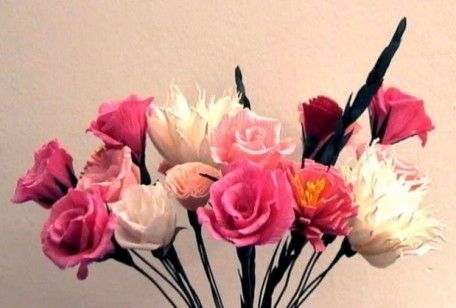
Paper flowers are wonderful decorations for the home, adding a personalized touch to any space. But how exactly do you make paper flowers? What is the best process to follow? Here are some small tips to help you create beautiful paper flowers to brighten up your home.
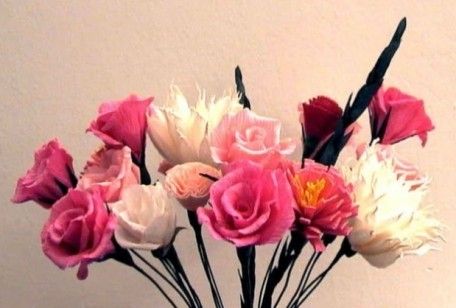
Materials Needed
To get started with making paper flowers, you will need the following materials:
- Crepe paper (ideal for floral creations, as it is easy to shape and durable)
- Tissue paper or rice paper (for lighter and more delicate petals, optional)
- Scissors
- Thin wire
- Thicker wire for the branches and stem
- Wire cutters
- Nylon thread
- Paper tape
- Green gutta-percha tape (readily available at most florists)
Step-by-Step Guide
1. Choosing the Paper
To make paper flowers, crepe paper is often the best choice, especially for beginners. It’s more resistant and easily shaped compared to other papers. When selecting colors, bright and pastel colors work well, adding a touch of joy to your home.
2. Cutting the Petals
To create the petals of your paper flowers, start by cutting the crepe paper into strips. Then, fan out the upper edges of each strip and cut them into your desired shape. For curved petals, gently wrap the ends around a wooden stick and hold the shape for a few moments. To make concave petals, press the center of the strip with your fingers and pull the edges outward.
3. Using Templates for Precision
If you prefer more precision in your petal shapes, you can create a template using cardboard. Draw your desired petal shape on the cardboard, then use it to cut out identical shapes from the crepe paper.
4. Assembling the Stem and Leaves
For the stem, use thicker wire and cover it with green gutta-percha tape. Attach the petals and leaves to the stem by twisting them onto the wire with a few turns of thin wire.
5. Creating the Stamens
To make the stamens, cut a strip of fringed paper and wrap it around the stem using nylon thread.
6. Adding Detail
To create the veins of the flowers, you can use watercolors to gently paint delicate lines on the petals.
Final Tips
With experience, you’ll become more comfortable and precise in your technique. Don’t worry if your first attempts aren’t perfect—practice will lead to more refined, beautiful results. Once you’ve mastered the basics, you can experiment with different shapes, colors, and designs to make your paper flowers even more unique.