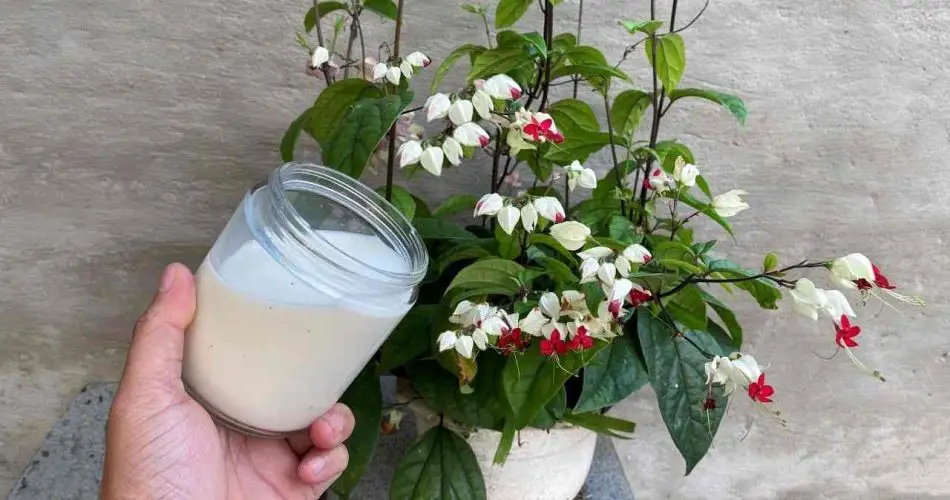
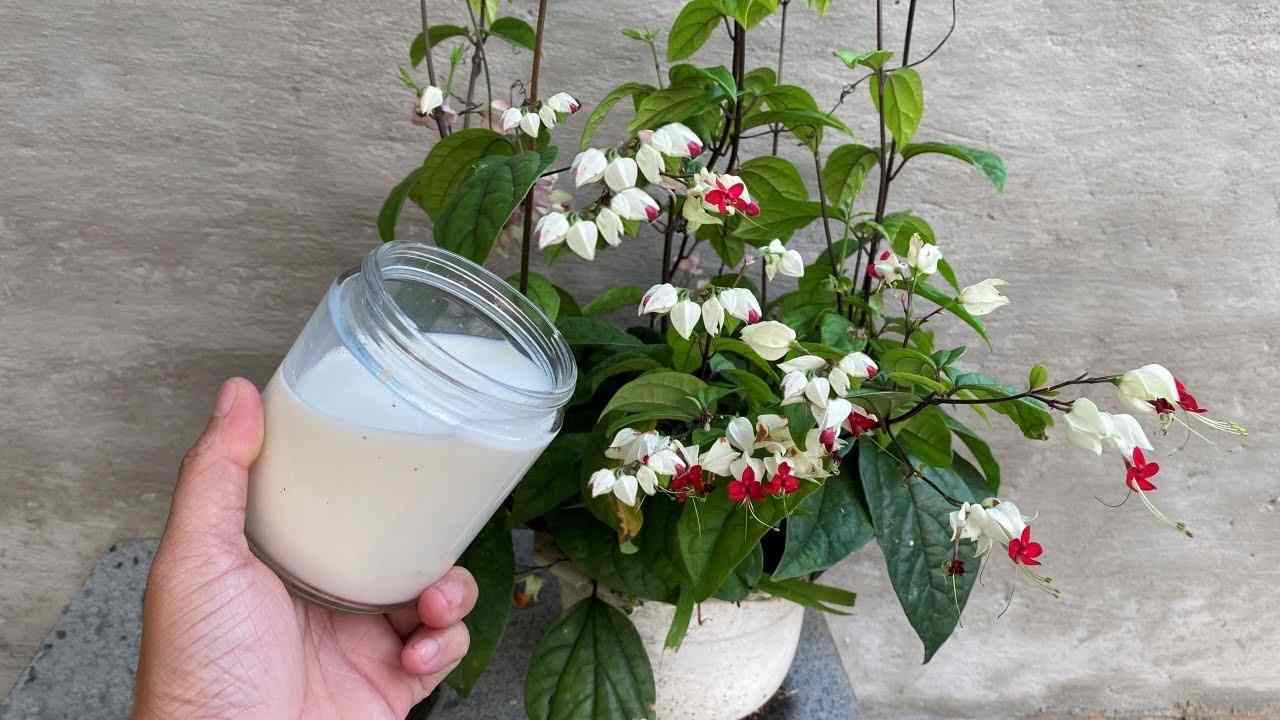
If you’re looking for a way to keep your indoor or garden plants healthy and thriving, consider using milk in your watering routine. This everyday ingredient has surprising benefits for plant health. Here’s how and why milk can be a great addition to your plant care regimen:
Benefits of Using Milk for Plants
- Nutrient Boost:
- Milk is rich in vitamins and minerals such as calcium, potassium, and magnesium, which are essential for plant growth. These nutrients help strengthen plants and improve their overall health.
- Disease and Pest Control:
- Milk has natural antimicrobial properties that can help prevent and manage fungal infections and pests. It can be particularly effective against powdery mildew, a common plant disease.
- Improved Soil Health:
- When used in moderation, milk can enhance the soil’s nutrient content, contributing to better plant growth. The nutrients in milk help support the soil microbiome, which benefits plant roots.
How to Use Milk for Your Plants

Ingredients:
- 500 milliliters of unsweetened milk
- Water
Instructions:
- Prepare the Mixture:
- Combine 500 milliliters of unsweetened milk with an equal amount of water. This dilutes the milk so it’s not too concentrated, which can help prevent any potential negative effects on your plants.
- Water Your Plants:
- Use the milk-water mixture to water your plants. Apply it in a thin layer over the soil or directly onto the plant leaves if you are treating for fungal issues. Be careful not to overwater, as too much liquid can lead to other problems.
- Follow Up:
- After about 10 hours, water the plants again with plain water. This helps to wash off any residue and ensures that the plant roots can absorb the nutrients effectively without getting saturated.
- Frequency:
- You can use this milk mixture as often as needed, depending on your plant’s health and growth requirements. Monitor your plants and adjust the frequency based on their response.
Considerations and Tips
- Use Unsweetened Milk: Ensure that you use unsweetened milk to avoid adding sugars that could promote unwanted microbial growth.
- Monitor Plant Response: Not all plants may respond equally to milk watering. Observe how your plants react and adjust the mixture or frequency if necessary.
- Avoid Direct Sunlight: Watering with milk can make plants more prone to fungal growth if left in direct sunlight. Ensure plants have some shade or indirect light when using this method.
By incorporating milk into your plant care routine, you provide your plants with an extra boost of nutrients and a natural defense against diseases. It’s a simple, cost-effective way to enhance your gardening efforts and keep your plants looking their best.
Show Comments