Flowers add elegance and charm to our homes, brightening up any room with their vibrant colors and fragrant scents. However, many plants only bloom during specific times of the year, often in spring. If you’re a fan of tulips and want to enjoy their beauty year-round, there’s an easy solution—growing them in water! In this article, we’ll guide you through the process of forcing tulip bulbs in water and share similar techniques for other flowers like hyacinths and amaryllis.

How to Force Tulip Bulbs in Water
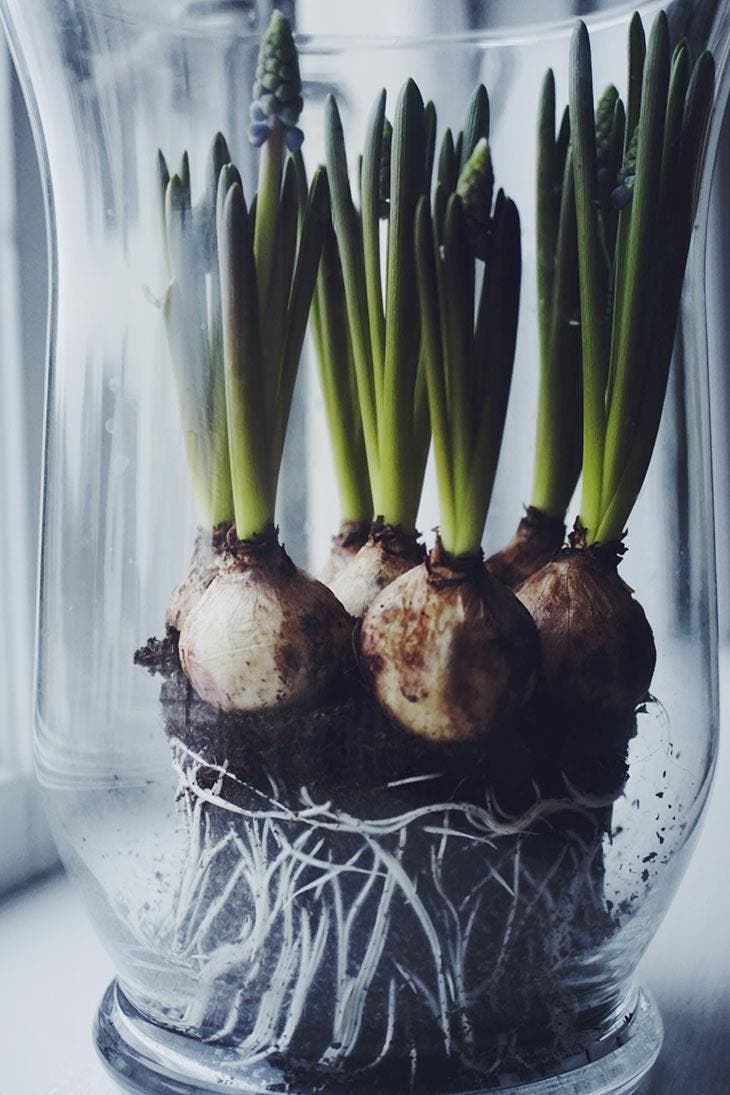
Forcing bulbs is a technique used to make flowers bloom out of season. By tricking the bulbs into thinking spring has arrived, they’ll start to bloom much earlier than expected. Tulips, along with other spring-flowering bulbs like hyacinths and daffodils, are perfect candidates for this method.
Step-by-Step Guide to Forcing Tulips in Water:
- Choose Healthy Bulbs: Pick large, firm bulbs. The bigger the bulb, the more vibrant the flowers will be. Shorter tulip varieties tend to tolerate forcing better.
- Chill the Bulbs: To simulate winter, store the bulbs in a cool environment, such as the vegetable drawer of your fridge, for about 4 months. Keep them away from fruits, as the gas emitted by fruits can prevent flowering.
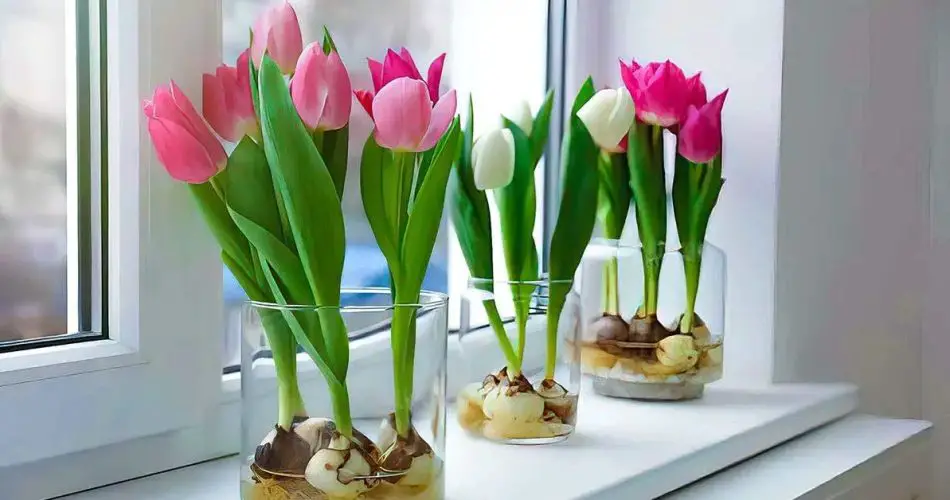
- Prepare the Vase: The right vase is crucial. It should allow the bulb to just touch the water. This ensures the roots can develop in the water without the bulb touching it, which can cause rotting. You can use a bulb carafe, a vase designed specifically for forcing bulbs, or an alternative method with decorative pebbles. The bulb should sit on the stones, pointed end up, and not be submerged.
- Storage for Root Development: Place the vase in a cool, dark place to encourage root growth. Change the water weekly to keep the roots hydrated.
- Move to a Bright Spot: After about a month, once the bulbs begin to sprout, move the vase to a bright, warm location. Avoid direct sunlight, and rotate the vase to ensure the bulbs receive even light.
- Maintain Water Levels: Ensure the water level stays just below the bulb, never touching it, to avoid rot. Keep changing the water regularly to maintain the right humidity.
Important Tip: Tulip bulbs can only be forced once. Once they have bloomed, compost them or dispose of them if they show signs of disease.
Growing Hyacinths in Water
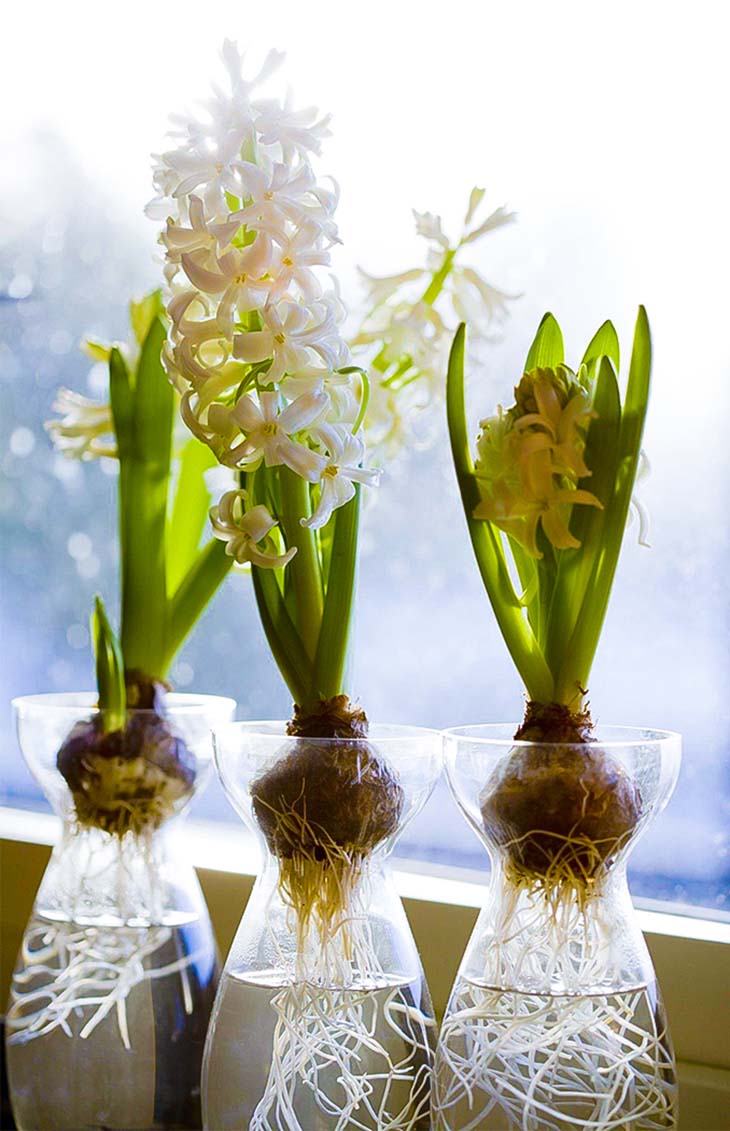
Hyacinths, known for their fragrant, colorful flowers, can also be grown in water using the same principles as tulips.
How to Grow Hyacinths in Water:
- Prepare the Bulbs: Cool the bulbs in the fridge for 8-10 weeks to simulate winter.
- Choose a Bulb Vase: Select a glass bulb vase that holds the bulb above the water, ensuring only the roots touch the water.
- Storage: Keep the vase in a cool, dark place and change the water twice a week for optimal growth.
- Bright Spot for Blooming: Once the bulbs sprout, place the vase in a bright, warm spot. Rotate the vase regularly for even light distribution.
After about 6 weeks, your hyacinths should be ready to bloom, with the foliage reaching about 5 cm and roots extending to the bottom of the vase.
Growing Amaryllis in Water
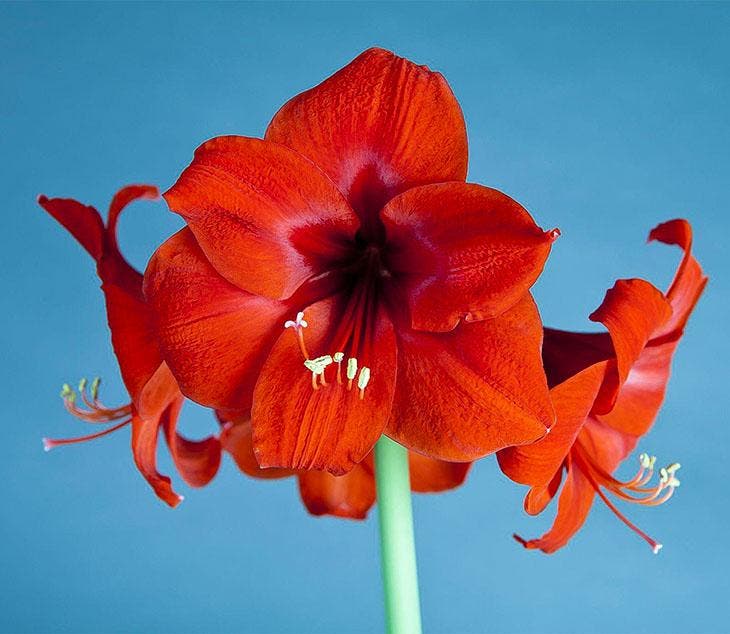
Amaryllis is a perennial with stunning, fragrant flowers. Growing amaryllis in water is an easy way to enjoy its beauty without soil.
How to Grow Amaryllis in Water:
- Prepare the Vase: Use a clear glass vase and fill it with stones or pebbles. The layer should be about 3 inches deep.
- Position the Bulb: Place the bulb with the roots down, ensuring that the top third of the bulb remains exposed above the stones.
- Add Water: Fill the vase with water just below the bulb, being careful not to submerge it. Keep the water level constant.
- Place on a Sunny Windowsill: Ensure the vase gets plenty of light but avoid direct sunlight. Check the water level regularly to keep it constant.
- Post-Bloom Care: After flowering, you can transplant the amaryllis into a pot with good potting soil for future blooms. However, it may only bloom once in water.
Enjoy Year-Round Blooms
By following these simple steps, you can enjoy beautiful, fragrant flowers like tulips, hyacinths, and amaryllis throughout the year—without needing soil! This method allows you to bring the beauty of spring into your home, no matter the season. Whether you choose water or decorative stones, this technique ensures a clean, soil-free way to fill your space with vibrant flowers.