If you’re new to plant care but still want to have something that adds a touch of elegance and greenery to your space, a Ficus Bonsai might be the perfect choice. These miniature trees, often referred to as “living sculptures,” can thrive with minimal space and still give off that lush, calming vibe. However, just like any plant, a Ficus Bonsai requires attention and care, especially when it comes to watering.

Why the Right Watering is Crucial for Your Ficus Bonsai
The key to maintaining a healthy, vibrant Ficus Bonsai is getting the watering just right—not too much, not too little. Unlike other plants, the Ficus Bonsai thrives on balance when it comes to moisture. Overwatering or underwatering can both lead to health issues, making it essential to understand how to hydrate your bonsai properly.
How to Check When Your Ficus Bonsai Needs Watering
One of the most important aspects of caring for your Ficus Bonsai is knowing when to water it. The best way to check is by feeling the soil. Simply stick your finger into the soil to check its moisture level. If it feels dry about an inch down, it’s time to water. However, don’t rely only on surface moisture—sometimes the surface can feel wet while the deeper soil is dry, leading to the plant dying due to lack of water.

The soil tends to dry out faster in the summer months, so you’ll need to check the moisture more frequently during this time. Keep in mind that heat and sunlight cause the plant to absorb more water, making regular checks even more important in the warmer months.
Best Method for Watering Your Ficus Bonsai
To water your Ficus Bonsai correctly, one of the most effective methods is to use a basin. Here’s how:
- Fill a basin with 4-7 cm of water.
- Immerse the pot of your bonsai completely into the basin, so the water can soak through the soil.
- Let the plant sit in the water for about 20 minutes so that the water can saturate the soil, ensuring that the roots are properly hydrated.
After this time, remove the bonsai from the water and let it drain a little before placing it back in its spot. This is especially important during the hot summer months when your Ficus needs extra hydration.
Adjusting Your Watering Routine in Different Seasons
In the summer, during the hottest months (typically around August), the Ficus Bonsai will need more water because the soil dries out quickly. The basin method mentioned earlier is ideal for these high-temperature days.

In contrast, during autumn and winter, the watering schedule should be reduced. The Ficus will need less water as its growth slows down. In these cooler months, it’s best to water the bonsai only from above, providing just enough water to moisten the soil.
The Danger of Overwatering and How to Spot It

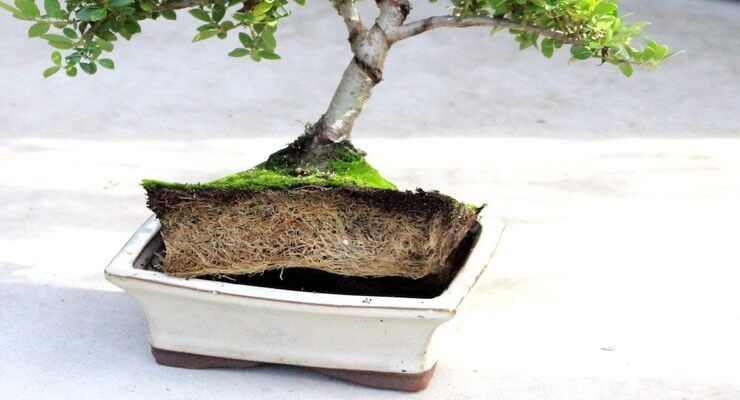
One of the biggest mistakes Ficus Bonsai owners make is overwatering. Over time, too much water can lead to root rot, which can be fatal for the plant. If you notice the leaves turning dark or black, it’s a sign that the plant may be suffering from overwatering. In this case, you’ll need to:
- Repot the plant with fresh, dry soil.
- Prune the rotten roots to prevent the rot from spreading.
Once you’ve done this, your Ficus Bonsai should bounce back, showing signs of new growth in a few days.
How to Refresh the Leaves Without Overwatering
Sometimes, your Ficus Bonsai may need a little extra hydration for its leaves, but without soaking the soil too much. A simple trick is to use a spray bottle to mist the leaves with water. This helps to refresh the foliage without risking waterlogged roots. Spraying the leaves also mimics the natural conditions of tropical rainforests, where the Ficus is native, and it allows the plant to absorb the right amount of moisture through its leaves.
How to Tell if Your Ficus Bonsai Is Healthy by Looking at Its Leaves
Observing the leaves of your Ficus Bonsai is one of the simplest ways to gauge its overall health:
- Yellowing leaves typically indicate that the plant has been underwatered. In this case, a good watering will usually solve the problem.
- Dark or blackened leaves are a sign of overwatering, and it’s a red flag that you may need to check the roots for rot.
The Right Environment for Your Ficus Bonsai
Your Ficus Bonsai will thrive best when it gets enough sunlight. Make sure to place it in a spot where it can receive several hours of indirect sunlight each day. In colder months, though, reduce exposure to direct sunlight to prevent leaf burn.
Additionally, avoid placing the plant near heat sources like radiators or air conditioners, as extreme temperatures can stress the plant and lead to dry soil or unhealthy leaves.
Conclusion: The Secret to Keeping Your Ficus Bonsai Lush and Healthy
With a little attention to detail and proper watering techniques, your Ficus Bonsai can remain lush and healthy year-round. The key is to observe the plant, understand its needs, and adjust your care routine based on the season and temperature. By checking the moisture level, using the basin method, and refreshing the leaves with a spray bottle, you’ll be well on your way to having a thriving Ficus Bonsai that adds charm and tranquility to your home.