Jasmine is one of the most beloved climbing plants, known for its elegant white flowers and intoxicating summer fragrance. However, many people mistake it for Rincospermum (Trachelospermum jasminoides), also known as false jasmine or star jasmine.
Although these two plants may look similar at first glance, they have distinct characteristics, including differences in their flowers, leaves, scent, and resistance to cold.

Knowing how to distinguish between them is important—not just for gardening purposes, but also for safety reasons, as false jasmine contains toxic compounds.
🌸 What is Jasmine?
Jasmine (Jasminum spp.) is a climbing plant that blooms in spring, filling the air with its intensely sweet fragrance.
✔ Flowers: White (sometimes cream-colored), with six wide petals.
✔ Leaves: Composed of 3-7 lanceolate leaflets.
✔ Growth: Can reach up to 5 meters in height.
✔ Hardiness: Not evergreen, meaning it loses its leaves in winter and does not tolerate frost well.
Since jasmine is sensitive to cold, it is less common in colder regions unless grown in protected environments.
🌟 What is False Jasmine (Rincospermum)?
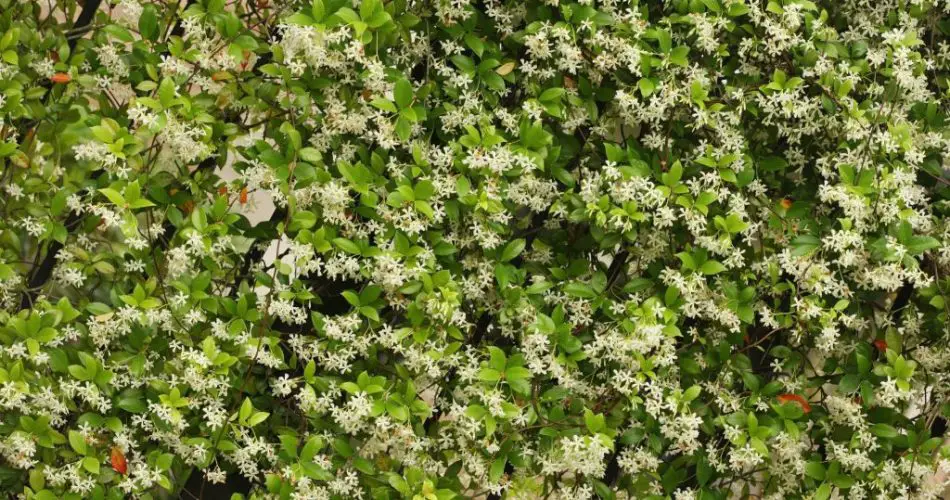
Often confused with true jasmine, Trachelospermum jasminoides, also called star jasmine or Chinese jasmine, is a hardy, climbing plant that is much easier to grow.
✔ Flowers: White or pink, shaped like a small star, with five narrow, tubular petals.
✔ Leaves: Bright green, oval, and robust.
✔ Growth: Can reach up to 10 meters in height.
✔ Hardiness: Evergreen and resistant to frost, making it a better choice for colder climates.
Despite its similar fragrance, false jasmine’s lighter scent sets it apart from the intensely sweet aroma of true jasmine.
🌿 Key Differences Between Jasmine and False Jasmine

| Feature | Jasmine (Jasminum spp.) | False Jasmine (Trachelospermum jasminoides) |
|---|---|---|
| Botanical Family | Oleaceae | Apocynaceae |
| Flower Shape | Wide petals (usually six) | Thin, star-shaped petals (usually five) |
| Flower Color | White or cream | White or pink |
| Fragrance | Strong and sweet | Lighter scent |
| Leaf Shape | Lanceolate leaflets (3-7 per leaf) | Simple oval leaves |
| Growth Height | Up to 5 meters | Up to 10 meters |
| Evergreen? | ❌ No, loses leaves in winter | ✅ Yes, keeps leaves year-round |
| Cold Resistance | ❌ Sensitive to frost | ✅ Very frost-resistant |
⚠ Why is it Important to Identify False Jasmine?

Even if you don’t use jasmine for its essential oils, it is crucial to recognize false jasmine because it contains toxic alkaloids.
☠ Toxicity Warning
Unlike true jasmine, which is safe, false jasmine is toxic if ingested. If pets, children, or even adults accidentally consume its flowers or leaves, it can cause:
❌ Dizziness
❌ Loss of balance
❌ Blurred vision
❌ Weakness
❌ In severe cases: paralysis or death
False jasmine is similar to oleander, another highly toxic plant, meaning caution is necessary when planting it near animals or small children.
🌿 Which One Should You Grow?
✔ If you want a highly fragrant plant and don’t mind protecting it in winter, true jasmine is an excellent choice.
✔ If you prefer a low-maintenance, frost-resistant climber, false jasmine is the better option.
Now that you know the differences, you can choose the right plant for your garden while ensuring safety and proper care.
💬 Which jasmine do you prefer? Let us know in the comments! 👇✨