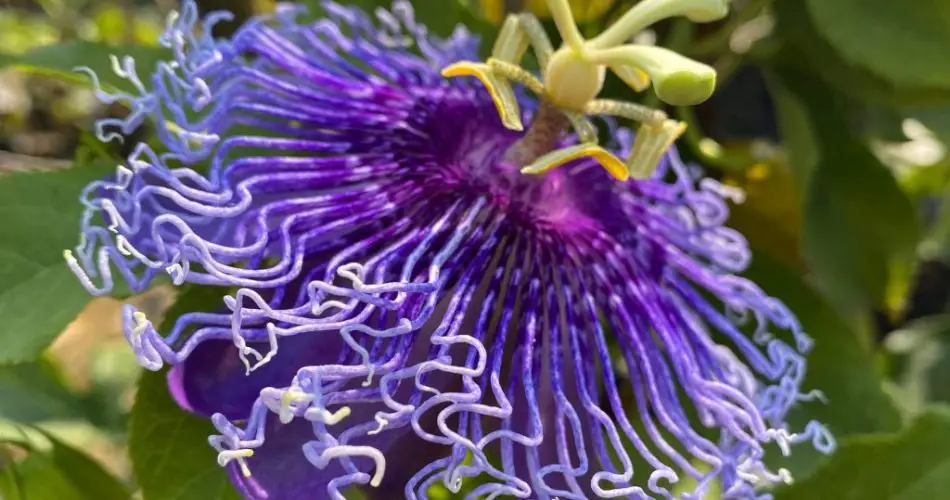
Passionflower (Passiflora incarnata) is a beautiful climbing plant known for its striking flowers and medicinal properties. It produces passion fruit (or maracujá), a delicious and vitamin-rich fruit widely used in cooking and cocktails.

Native to Central and South America, passionflower belongs to the Passifloraceae family, which includes over 500 species. Some varieties can even be grown in Italy, North America, Australia, and Asia.
Beyond its ornamental beauty, passionflower has long been valued for its calming, pain-relieving, and antioxidant properties. Let’s explore how you can successfully grow this plant and what makes it so beneficial! 🌸
🌱 How to Grow Passionflower

Passiflora incarnata is a perennial climber that thrives in gardens or pots. To ensure its healthy growth, you’ll need to pay attention to light exposure, fertilization, and watering.
🪴 Growing Passionflower in a Pot
✔ Repotting: Between March and April, move it to a slightly larger container until it reaches a 25-30 cm diameter.
✔ Soil Refreshing: Once it reaches its final pot, change the top 2-5 cm of soil annually to keep it fertile.
🌿 Planting Passionflower in the Ground
✔ Soil Type: Prefers acidic, well-drained soil rich in organic matter, peat, and sand.
✔ Avoid Heavy Soils: Clay-rich soils prevent water drainage, which can harm the plant.
☀️ Position & Temperature
✔ Full Sun: Passionflower requires constant sunlight for healthy growth.
✔ Winter Protection: While it tolerates Mediterranean climates, it needs protection from frost in colder regions.
✔ Ideal Temperatures: Prefers 18-27°C in summer and around 10°C in winter.
🌿 Fertilization & Watering
✔ Fertilization: Apply a slow-release granular fertilizer or mix a liquid fertilizer into watering during March-April.
✔ Watering: Passionflower mostly relies on rainwater, but in dry periods, ensure the soil stays moist but not waterlogged.
✔ Potted Plants Need More Water: Since pots dry out faster, they require more frequent watering.
🌸 What Is Passionflower Used For?

Passiflora incarnata is highly valued in herbal medicine for its therapeutic properties. It is used to treat sleep disorders, stress, pain, and inflammation.
😴 Natural Sleep Aid & Anxiety Relief
✔ Sedative Effect: Passionflower has a calming impact on the nervous system, promoting better sleep.
✔ Combats Insomnia & Stress: Often combined with chamomile, valerian, and lemon balm for relaxation.
✔ Helps with Depression, Phobias & Nervousness.
💆♀️ Natural Pain Reliever
✔ Relieves muscle tension & menstrual pain.
✔ Helps with menopausal symptoms.
❤️ Supports Heart Health
✔ Used in supplements to manage high blood pressure, palpitations, and irregular heartbeat.
🩹 Anti-Inflammatory & Skin Benefits
✔ Helps treat swelling, hemorrhoids, and burns when applied topically.
✔ Fights free radical damage with powerful antioxidants like quercetin, rutin, and apigenin.
⚠️ Side Effects & Contraindications

While passionflower is a natural remedy, it does have some risks:
❌ Not for Pregnant Women: Contains harmaline, which has an oxytocin-like effect and can cause uterine contractions.
❌ May Interact with Medications: Can enhance the effects of anxiety drugs, leading to excessive sedation.
❌ Not Recommended for Children Under 12.
❌ Potential Side Effects: Confusion, dizziness, drowsiness, nausea, vomiting, tachycardia, and arrhythmia.
💡 Tip: Always consult a doctor before using passionflower supplements!
🌿 Final Thoughts: A Beautiful & Beneficial Plant
Passionflower is not just a stunning climber for your garden or balcony—it’s also a powerful natural remedy for stress, sleep disorders, and heart health. By following the right cultivation tips, you can enjoy its vibrant blooms and health benefits year-round.
🌱 Will you be adding passionflower to your garden? Let me know! 😊