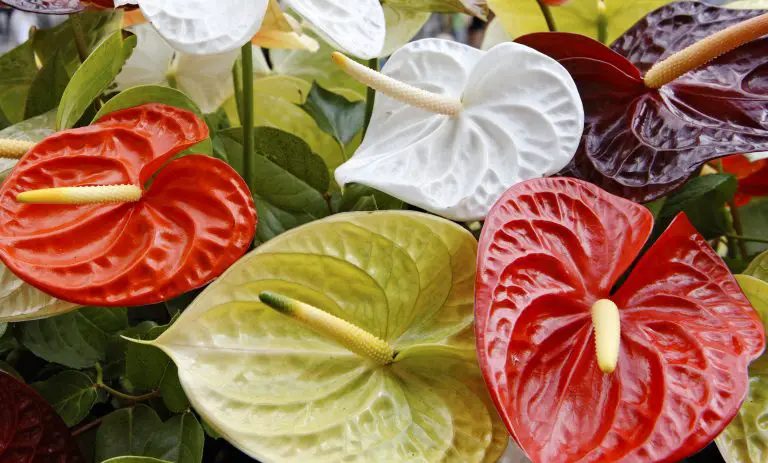
The Anthurium is a stunning tropical houseplant known for its shiny leaves and bright, colorful flowers. Also called the “flamingo flower” or “tongue of fire,” it thrives in warm, humid environments and makes a perfect addition to any apartment.
To keep your Anthurium healthy, it’s essential to provide proper care, the right soil, and the best placement in your home. In this guide, we’ll explore how to care for your Anthurium, prevent common diseases, and encourage beautiful blooms.
🌺 Popular Anthurium Varieties

The color of your Anthurium can symbolize different meanings:
- White Anthurium → Purity & peace
- Yellow Anthurium → Joy & happiness
- Red Anthurium → Love & passion
Among the many species, some of the most popular varieties include:
🌿 Anthurium andraeanum – The most common species, featuring large, glossy, heart-shaped leaves and bright red flowers.
🌿 Anthurium clarinervium – Known for its dark green leaves with striking silvery-white veins.
🌿 Anthurium crystallinum – Native to Peru & Colombia, this species has large, velvety leaves with crystal-like streaks.
🌿 Anthurium veitchii – Characterized by its elongated, blue-green leaves that can grow up to 90 cm long.
🌿 Anthurium scherzerianum – A great indoor option with various flower colors, including red, pink, and yellow.
🌱 How to Grow Anthurium in a Pot
To keep your Anthurium healthy, follow these essential care tips:
🪴 Soil & Repotting
✅ Best soil: A mix of orchid soil & universal potting soil, creating a light and porous environment.
✅ Repotting: Every two years, ensuring stems are not covered with soil.
✅ Fertilizing: Feed every two weeks (from May to October) with liquid fertilizer containing iron, copper, manganese, and zinc.
🚫 No fertilizer is needed during winter.
💧 Watering & Humidity
✅ Water every 2-3 days, keeping the soil moist but not soaked.
✅ Place a saucer with expanded clay under the pot to maintain humidity without root rot.
✅ Use distilled or filtered water to avoid harmful minerals like chlorine.
💡 Tip: If your Anthurium’s leaves turn yellow or brown, check for overwatering, cold water, or poor drainage.
☀️ Light & Temperature
✅ Bright, indirect light is ideal—avoid direct sunlight, which can burn the leaves.
✅ Keep indoor temperatures above 16°C (60°F).
✅ Maintain humidity by placing pebbles or sand in a pot holder with a little water (but not touching the pot).
🌞 In summer: Move your plant outdoors to a shady terrace or porch.
❄️ In winter: Avoid cold drafts and keep it in a warm, humid spot.
🌿 Disease Prevention & Common Issues
🚨 Watch out for:
- Aphids & scale insects → These pests create cottony spots on leaves.
- Fungal infections → Cause dark spots and damaged leaves.
✅ Solution: Keep leaves clean by wiping them with a damp cloth and use natural insecticides if needed.
✂️ Pruning & Encouraging Blooms
✅ Prune faded flowers by cutting stems at the base.
✅ Remove yellow or dry leaves to keep the plant healthy.
✅ Rotate the plant to ensure all leaves receive equal light.
✅ Avoid letting the plant wilt between waterings.
🌺 Blooming season: Late spring to summer, but under ideal conditions, your Anthurium can bloom year-round!
🏡 Where to Place Anthurium in Your Home

📍 Best locations:
- Near a window with indirect sunlight
- In a warm, humid area (like a bathroom or kitchen)
- On a shaded balcony or porch (in summer)
🚫 Avoid placing it:
- Next to drafty windows
- Near radiators or heat sources
- In direct sunlight
🌟 Final Tips for a Thriving Anthurium
✅ Keep the leaves clean to help the plant absorb light.
✅ Maintain consistent humidity for healthy growth.
✅ Rotate the plant regularly to encourage even blooming.
With proper care, your Anthurium will reward you with lush leaves and vibrant flowers all year long! 🌿✨
🌸 Have you ever grown an Anthurium? Share your experience in the comments! 👇