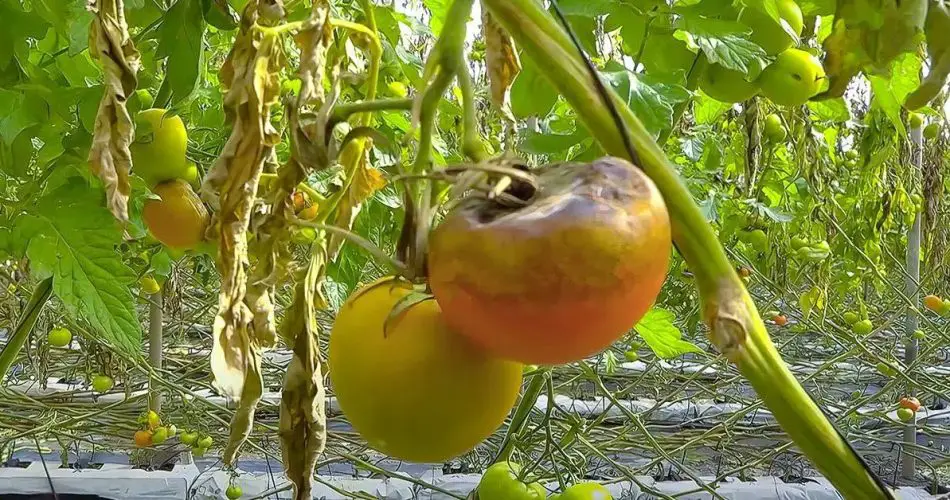
Tomatoes are a beloved part of many dishes—from salads to sauces and even juices. Their versatility and flavor make them a garden favorite. But growing tomatoes isn’t always smooth sailing, especially when dealing with tomato mildew. If you’ve noticed brown spots or other signs of mildew on your plants, it’s crucial to act quickly to prevent further damage. Luckily, there are several natural treatments to fight this fungal disease and protect your crop. Here are 9 ways to tackle tomato mildew naturally.

What is Tomato Mildew?
Tomato mildew, or downy mildew, is a fungal disease that appears as large, irregular brown spots on the leaves and stems of tomato plants. These spots grow over time, causing the affected areas to dry out and reducing the plant’s ability to photosynthesize, ultimately leading to plant death if untreated.
Factors like humidity, weather conditions, and nitrogen fertilization can influence how quickly the disease spreads. Mildew thrives in humid, warm environments (with humidity above 90% and temperatures between 10-25°C), but it can be controlled with the right approach.
9 Natural Treatments Against Tomato Mildew
Once mildew sets in, it’s hard to control, so it’s best to act preventively. Here are nine natural remedies to protect your tomatoes:

1. Horsetail Infusion
Horsetail is a natural fungicide that can help control mildew.
How to Use:
- Soak 1 kg of fresh horsetail (or 150g of dried horsetail) in 10 liters of water for 24 hours.
- Boil the mixture for 20 minutes, then let it cool.
- Dilute the solution (5 parts water to 100 parts horsetail tea) and spray it on your tomatoes.
2. Sage Extract
Sage also has antifungal properties that can repel mildew.
How to Use:
- Soak 1 kg of sage leaves and flowers in 10 liters of water.
- Ferment the solution for a few days, then dilute it to 10% strength before spraying on your tomato plants.
3. Chamomile Infusion

Chamomile is another natural remedy with antifungal effects.
How to Use:
- Prepare an infusion with 50g of chamomile flowers for each liter of water.
- Dilute the infusion to 1 part chamomile tea to 9 parts water and spray on your plants.
4. Garlic Solution

Garlic is known for its natural antifungal properties.
How to Use:
- Infuse 50g of garlic cloves per liter of water.
- Dilute the garlic solution in 4 parts water, then spray it on your tomatoes regularly, especially in sunny weather.
5. Cow’s Milk
Milk forms a protective microbial film on the leaves and alters the plant’s pH, making it less susceptible to mildew.
How to Use:
- For preventive treatment, dilute 3 cups of milk in 7 cups of water and water your tomatoes.
- For more frequent treatment, dilute 1 cup of milk in 4 cups of water and spray on your plants, especially early in the morning.
6. Copper Wire
This century-old method involves planting copper wire near the base of the tomato plant to provide it with copper, enhancing its resistance to mildew.
How to Use:
- Insert a small copper wire into the stem near the ground. You’ll notice the plant’s leaves darkening as it strengthens and becomes more resistant to mildew.
7. Nettle Manure
Nettle manure is a powerful fungicide that helps to repel tomato blight.
How to Use:
- Soak 1 kg of fresh nettles in 10 liters of water for 10 days.
- Stir regularly and once fermentation stops, use the solution to spray your plants.
8. Bordeaux Mixture
Bordeaux mixture is a classic fungicide made from copper sulfate, lime, and water, effective against mildew.
How to Use:
- Mix 3 liters of water with 150g of slaked lime in one bucket and 2 liters of water with 100g of copper sulfate in another.
- Combine both mixtures after 24 hours to form your Bordeaux mixture and spray it on your tomatoes.
9. Baking Soda

Baking soda is a gentle yet effective remedy for mildew.
How to Use:
- Mix 1 teaspoon of baking soda and 1 teaspoon of soap (Black or Marseille) in 1 liter of water.
- Spray your tomatoes once a week for two months, and after each rainfall.
Additional Tips for Preventing Mildew
While natural treatments are effective, prevention is key to keeping mildew at bay:
- Ensure adequate spacing between plants to allow proper air circulation.
- Remove any leaves in contact with the ground to reduce moisture buildup.
- Avoid excess watering, as this can promote mildew growth.
- Consider crop rotation to prevent reinfection.
- Use clean pruning tools to avoid spreading the disease.
- Fertilize with low-nitrogen and high-potassium fertilizers to strengthen plants.
- Grow resistant tomato varieties and avoid planting tomatoes near potatoes, which can spread the same fungus.
- Water plants at the base and avoid wetting the foliage.
When to Treat Your Tomatoes Against Mildew
If you spot mildew despite preventive measures, it’s important to act quickly. Start treatment as soon as you notice the first symptoms, and continue applying treatments regularly to save your plants and ensure a healthy harvest.
By using these natural remedies and following these preventive measures, you can protect your tomatoes from the harmful effects of mildew, ensuring a bountiful, healthy crop for all your culinary creations. Happy gardening!


