As spring breathes life into dormant trees, safeguarding them against sunburn and abrupt temperature fluctuations becomes paramount.
Among the most effective methods of protection lies the practice of whitewashing tree trunks and branches.
Benefits of Spring Whitewashing:
Sunburn Shield: Winter sun exposure can cause bark overheating, leading to unsightly cracks. A white coating reflects sunlight, shielding the bark from excessive heat.
Pest Deterrence: Bark crevices harbor overwintering pests, which become more visible to hungry birds against the white backdrop.
Fungal Disease Prevention: Some fungi linger on tree bark through winter. Whitewashing helps eradicate spores, minimizing the risk of infection.
Varieties of Whitewashing Solutions:
Classic Recipe:
10 liters of water 3 kg of slaked lime or chalk 500 g of copper sulfate 100 g of casein glue
With Clay and Manure:
10 liters of water 2 kg of slaked lime 1 kg of fatty clay 1 shovelful of manure 250 g of copper sulfate
With Stationery Glue and Karbofos:
2 liters of water 300 g of lime 2 tablespoons of copper sulfate 200 g of stationery glue 200 g of clay 25 g of carbophos
Steps for Tree Whitewashing:
Preparation: Begin by cleaning tree trunks and branches of dirt, moss, and lichen to ensure optimal solution adhesion.
Timing: Conduct the whitewashing in late February or early March, before buds unfurl, for maximum protection.
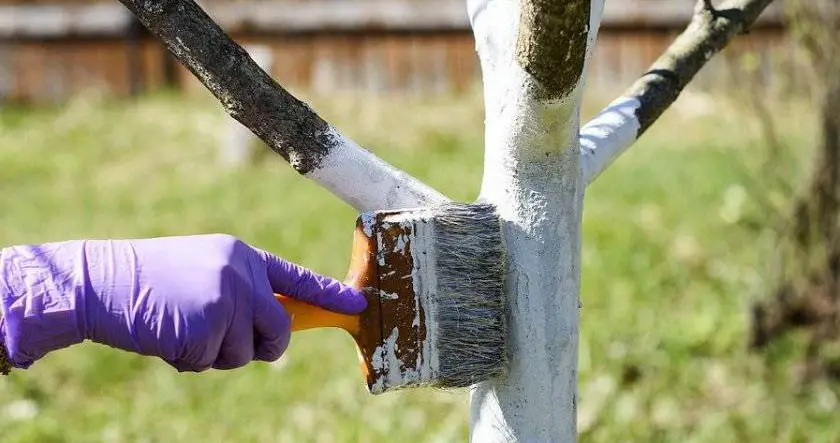
Application: Use a brush or roller to apply the whitewashing solution evenly in 2-3 layers, covering the entire surface thoroughly.
Adding a Fungicide: To bolster disease prevention, incorporate a fungicide into the solution.
Crucial Tips:
Avoid whitewashing in frosty or rainy conditions. Wear protective gear for hands and eyes. Refrain from whitewashing young seedlings with delicate bark. Spring whitewashing is a vital aspect of orchard maintenance, fostering tree health and productivity. Adhering to these guidelines ensures your garden thrives, nurturing optimal conditions for growth and blossoming.