In July, summer reaches its peak and many garden herbs are in full bloom. But even during this flowering period, it is important to prune certain herbs to promote their health and growth. In this post, you’ll find out which herbs you need to prune in July to keep them in tip-top shape for the rest of the summer and the coming fall.
Storing pruned herbs
If you want to prune herbs, it is not necessary to compost them or throw them into organic waste. Preserving pruned herbs is a great way to preserve their aroma and use them all year round in cooking. Drying is one of the simplest and most traditional methods of preserving herbs. Hang the cut herbs in small bundles in a ventilated, shaded place. Avoid direct sunlight, as this can harm the aroma. As soon as the herbs are completely dry (after one to two weeks), you can separate the leaves from the stems and place them in airtight jars or containers. Store them in a cool, dry place to preserve their aroma.
Preserving wild herbs
Another popular method for preserving the aroma of pruned herbs is to freeze them. Wash the herbs thoroughly and dry them lightly with a kitchen towel. Finely chop the herbs and place them in ice cube molds or airtight containers. Fill the molds or containers with olive oil or water and freeze them. You can then use the frozen herb cubes in different dishes. Marinating herbs in oil or vinegar is also a delicious method to retain their aroma while creating a spicy base for salad dressings, marinades and sauces. Chop the cut herbs and place them in clean jars. Then pour olive oil or vinegar over the herbs until they are completely covered. Close the jars and store them in a cool, dark place. Over time, herbs develop their flavor in oil or vinegar.
What herbs should you prune in July?
1.Rosemary (Rosmarinus officinalis)
Rosemary is a wonderful aromatic plant that is used in many Mediterranean dishes. In July, after the first flowering, it is ideal to prune rosemary. Remove spent flower stems and lightly trim new growth. This will encourage the plant to branch better and grow more compactly. Be careful not to cut too deeply into the lignified wood to avoid damage.
2. Lavender (Lavandula spp)
Lavender is known for its fragrant flowers and its multiple uses in cooking and aromatherapy. In July, after the first flowering, you should lightly prune the lavender. Removes spent flower stems and shortens new growth by about a third. This promotes vigorous growth and allows the plant to flower profusely again the following year.
3. Sage (Salvia officinalis)
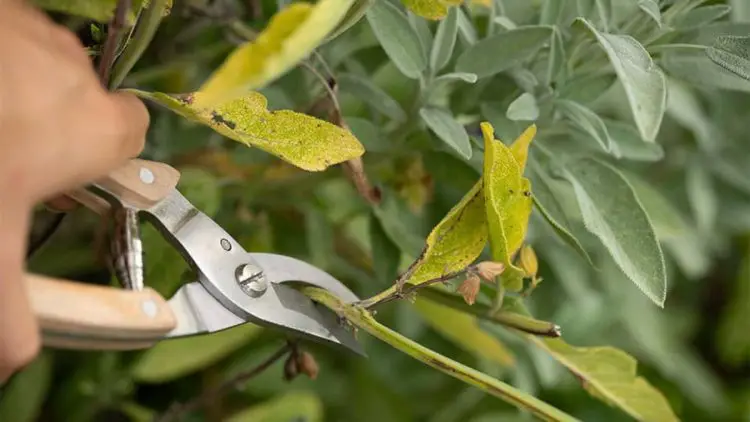
Sage is another popular herb with a strong aroma. After the first flowering in summer, you should prune the sage. Remove worn flower stems and lightly prune shoots to encourage branching. Sage can be pruned vigorously to obtain a compact shape and stimulate its growth.
4. Oregano (Origanum vulgare) and thyme (Thymus vulgaris)
Oregano and thyme are hardy herbs that are often in full bloom in July. Prune them lightly after the first flowering to encourage their growth and obtain a bushy and compact shape. Both grasses can be lightly pruned several times during the growing season to maintain their vitality.
5. Mint (Mentha spp.)
Mint is known for its rapid and sometimes aggressive growth. In July, you should prune the mint to keep it under control and prevent it from invading other plants in the garden. Cut shoots just above the ground to encourage fresh growth.