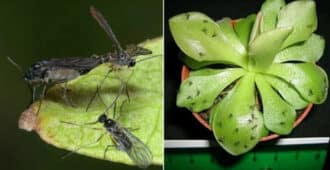
Indoor plants can attract midges, tiny flying insects that thrive in moist environments. Here’s a concise guide on how to protect indoor plants from midges using straightforward and effective methods:
1. Soil Drying Technique:
- Allow Soil to Dry: Midges are attracted to damp soil. Allow the top layer of soil to dry out between waterings to discourage midge breeding.
2. Monitoring and Maintenance:
- Remove Debris: Clear away fallen leaves, dead plant matter, and any standing water from saucers to eliminate breeding grounds for midges.
- Inspect Regularly: Check plants regularly for signs of midges, such as swarms of tiny flies around the soil surface.
3. Natural Remedies:
- Cinnamon Powder: Sprinkle cinnamon powder on the soil surface. Cinnamon acts as a natural repellent and disrupts midge larvae growth.
- Neem Oil: Dilute neem oil in water and spray it on the soil. Neem oil repels midges and has antifungal properties.
4. Yellow Sticky Traps:
- Use Sticky Traps: Place yellow sticky traps near affected plants to catch adult midges flying around. Replace traps when they become covered with insects.
5. Adjusting Watering Practices:
- Bottom Watering: Water plants from the bottom rather than the top to minimize moisture on the soil surface where midges lay eggs.
- Avoid Overwatering: Ensure pots have proper drainage to prevent water accumulation and reduce humidity levels.
6. Increase Air Circulation:
- Enhance Ventilation: Improve air circulation around indoor plants by placing them near a fan or opening windows periodically. Midges prefer stagnant air.
7. Hydrogen Peroxide Treatment:
- Dilute Solution: Mix hydrogen peroxide (3%) with water (1:4 ratio) and apply it to the top layer of soil. This helps control midge larvae without harming plants.
8. Preventive Measures:
- Quarantine New Plants: Inspect and quarantine new plants before introducing them to your indoor garden to prevent midge infestations.
- Maintain Cleanliness: Keep indoor gardening tools, pots, and surrounding areas clean to minimize potential habitats for midges.
Benefits of Midge Control:
- Healthy Plant Environment: Preventing midge infestations maintains plant health by reducing stress and potential disease transmission.
- Improved Aesthetic: Enjoy indoor plants without the nuisance of tiny flying insects disrupting your living space.
By implementing these simple and effective methods, you can protect your indoor plants from midges and ensure a thriving and pest-free indoor garden. Regular monitoring and proactive management will help maintain a healthy environment for your plants to flourish.
Show Comments