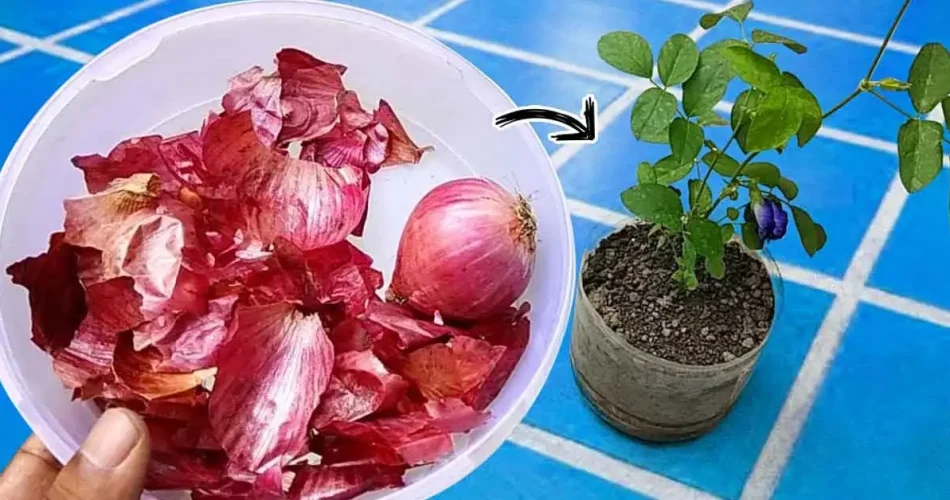
To keep your plants thriving, proper care is essential. This includes placing them in a sunny spot, ensuring they receive adequate water, and providing the right fertilizer. While store-bought fertilizers are widely available, you can create your own natural, eco-friendly, and cost-effective solution right at home. In this article, we’ll show you how to make an effective fertilizer using onion peels—a simple and sustainable choice for plant care.
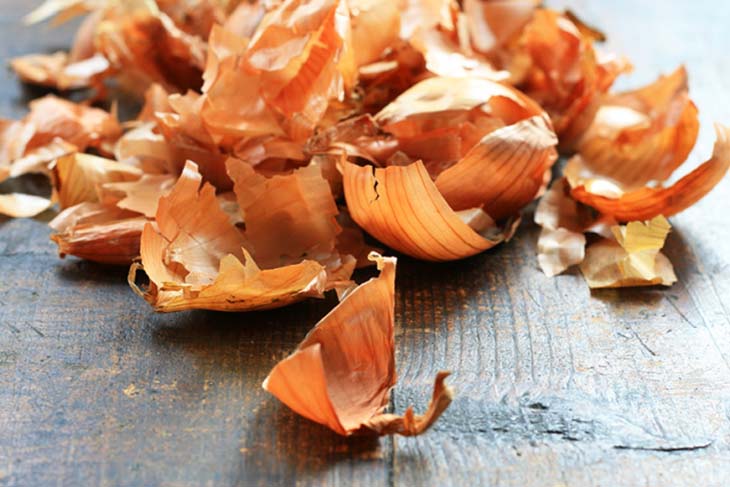
Ingredients for Natural Fertilizer from Onion Peels
- Onion skins
- 1 liter of water
- A plastic bottle
- A colander (or filter cloth)
Preparation and Use
- Collect Onion Skins: Begin by saving onion peels each time you use them. Fill a medium-sized bucket with the collected skins.
- Cut the Skins: Use a pair of scissors to chop the peels into small pieces to help them infuse more efficiently.
- Prepare the Mixture: Place the chopped onion skins into a plastic bottle and pour in 1 liter of water.
- Let it Steep: Allow the mixture to sit in the open air for 24 hours to let the nutrients from the onion skins infuse into the water.
- Strain the Solution: After 24 hours, strain the mixture using a strainer or filter cloth to remove any solid particles.
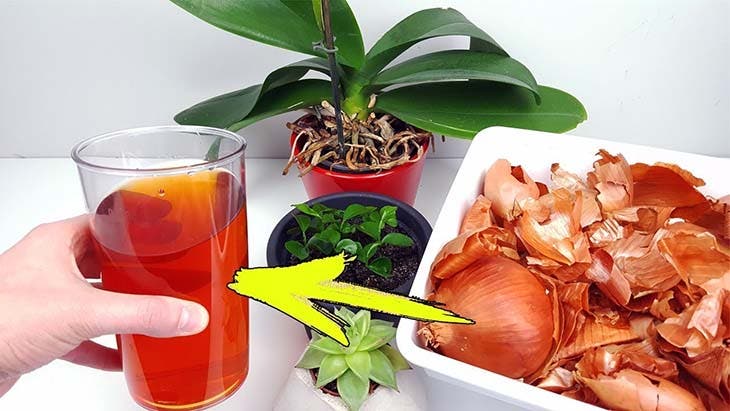
- Fertilizer Ready: Your natural fertilizer is now ready to use! This liquid can be applied to both indoor and outdoor plants for optimal growth.
Usage Tips
- This homemade fertilizer lasts for up to two weeks. After that, discard the remaining solution and make a fresh batch.
- When not in use, store the fertilizer in the refrigerator to keep it fresh.
- Use this onion water approximately every 20 days for optimal plant growth.
- This natural fertilizer is suitable for all types of plants—small or large, flowering or not, and helps promote healthy growth.
Additional Plant Care Tips
To ensure your plants grow healthy and strong, it’s important to consider a few key factors:
1. Light
Light is crucial for photosynthesis, which is how plants produce energy. Without light, plants cannot survive. Generally, plants with large leaves need less light due to their higher chlorophyll content.
2. Substrate
Soil texture is also vital for plant health. The best soils are fertile ones that retain water and nutrients. Clay soils are compact and absorb water effectively, while sandy soils do not retain water as well and require additional fertilizer.
3. Water
Water is a vital source of minerals for plants. Through their roots, plants absorb water from the soil, which supports their growth and health.
By following these simple steps and tips, you can create a sustainable and effective fertilizer using onion peels while ensuring your plants flourish in a healthy environment!