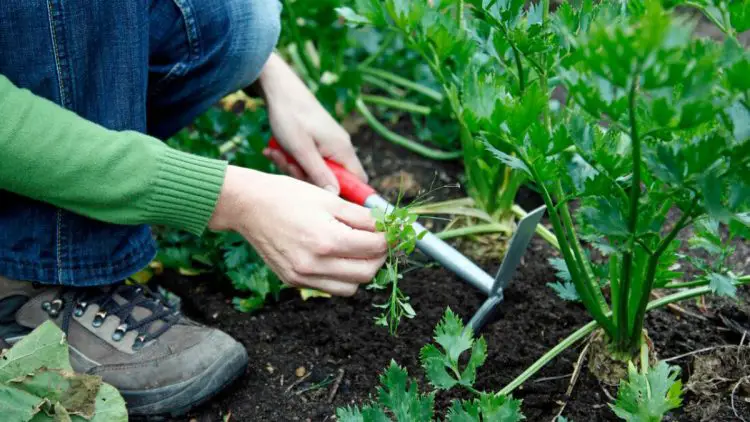
Weeds are as varied as the possibilities for combating them are numerous. Simply pull out the various weed species that are not yet deeply rooted. But for thistles or nettles, you absolutely have to wear gloves! By weeding before flowering, we prevent the plants from producing seeds. Balsam, for example, projects its seeds far away at the slightest contact. Also pull out any weeds near the pond. Because many herbicides threaten aquatic organisms, they should not be used near water. As you see, there are many ways to keep weeds at bay in the garden. We have summarized the 10 best tips for combating weeds for you.
1. Use weeds as indicator plants
Nettles and other plants tell us a lot about the condition of the soil in our garden. Properly interpreted, indicator plants can even help the gardener in his work. Weeds with stubborn roots like buttercup or quackgrass prefer to grow on compacted soil. They indicate that the soil needs to be better aerated. Others, like sheep sorrel, like acidic soils – in which case liming may be necessary. If you know the nature of the location, you can use it as inspiration for the design: Chickweed indicates soil rich in humus and nutrients – in new gardens this is the ideal location for vegetable crops.
2. Tried and good: the joint scraper
Removing weeds from paved surfaces using a joint scraper is environmentally friendly. The job is made considerably easier if you use a quality tool with a pleasant handle and a sharp blade. Remove weeds before flowering to prevent them from multiplying. Weedkillers are prohibited on paths, driveways and squares, provided they are sealed and not used for gardening. There is concern that the active substances could be carried away by runoff and end up in waters.
3. Weeding: unpopular, but effective
On large areas, the most effective way to eliminate weeds is with a hoe. It’s not that difficult if you have the right tool with the optimal working width. Plug-in systems are particularly practical. Here you only need one handle for different hoe attachments.
- Regular hoeing is particularly important in the vegetable garden
In the vegetable garden, where there is space between the rows or the soil is free until the next crop grows, weeding additionally interrupts the capillary system of the surface soil and thus reduces evaporation from higher areas. deep in the ground. This saves watering water – which explains the old gardener’s rule: “One weeding saves three waterings”.
- Tip: In dry, sunny weather, pulled weeds can be left as mulch, provided they have not yet formed seeds. It withers immediately.
4. Pull out taproots
Weeds with taproots such as dandelion, Canada thistle, blunt-leaved rumex or bird’s-eye knotweed must be pulled out thoroughly to completely remove the root. There are very effective tools for this purpose, easy to use while standing, for example from Fiskars or Gardena. Repeat the operation if the weeds grow back despite everything. But a weedkiller also makes it possible to effectively combat yarrow in the lawn, provided you notice it early enough.
5. Ingenious and effective: mulching
Under trees, rose bushes and shrubs, bark mulch or mulching compost is a brilliant solution to the problems. A layer of five to ten centimeters thick gives weeds virtually no chance. If something grows, it is very easy to pull it out, because the roots cannot find a foothold. Mulched surfaces warm up more quickly, the soil remains moist and loose. Tip: Bark mulch and wood shavings retain nutrients as they decompose, so it is advisable to fertilize flower beds with horn shavings before mulching.
6. Attractive green plant carpet
Ground cover plants are the most elegant method of smothering weeds in the garden. Where cultivated plants grow luxuriantly, weeds cannot grow. There are ground cover plants like golden nettle, which even crowd out stonecrop, especially for more shaded areas.
In ornamental gardens, plants such as ivy, stork’s beak, pachysandra, foxglove, periwinkle, lily of the valley or golden strawberry should be planted so that no leaves remain. open land for weeds. Respect the recommended planting distances, as this is the only way for ground cover plants to develop optimally. In the initial phase, it is useful to cover free spaces with bark humus. Tip: In specialized stores, there are already rooted vegetation mats (“ground cover by the meter”) that can be laid like roll grass.
7. Tear out quack grass and stonecrop without leaving a trace
Root weeds such as quackgrass, stonecrop or bindweed (Calystegia sepium) must always be pulled out without leaving any traces. If they have spread into the perennial bed, there is usually no other solution than to dig up all the perennials in the spring and remove all weed roots from the bed at the same time. using a spading fork. Next, we divide the perennial plants, we also check the sections for the presence of weed rhizomes and weed them out carefully before planting the plants. If a rhizome fragment remains in the soil, it will give rise to a new plant. This is why monitoring is also very important: After the renovation, check the bed regularly at short intervals for new weeds and pull them out immediately.
8. Artificial darkness
Opaque films, synthetic fabrics or mulching paper not only suppress weeds, but also store heat for plant growth.
After working the soil, provide the bed with a sufficient dose of long-lasting fertilizer and lay the mulching film flat on top. Then, to fix it, cover the film with soil on the sides and make cross cuts of three to five centimeters for vegetable plants or strawberries. As plastic films are not environmentally friendly for disposal, only use reusable woven materials or compostable films.
9. Heat instead of spray
On paths and driveways, using a flame or infrared device is a good solution. The use is non-toxic, but due to the use of gas and the risk of fire, this type of weeding is also not without controversy. Therefore, only use such devices on paved or gravelled surfaces and stay away from embankments covered with dry grass.
You can burn weeds growing in the paver joints of paths and driveways or, as here, destroy them using electrically generated heat.
Only treat weeds until the leaves turn dark green – there is no need to char them. As the lignified parts of the plant are more resistant to heat, intervention should take place at the earliest possible stage of the plant. Two to four treatments per year are necessary.
10. Should we compost weeds?
Making your own compost is a good thing. But it often happens that weeds are introduced through black gold. In professional composting facilities, high temperatures cause weed seeds and seedlings to die. In the home garden, the inside of compost piles is often not warm enough. Frequent turning, at least twice a year, is beneficial. If you want to play it safe, don’t throw weeds that are already bearing seeds into the compost. It is best to let weeds dry before putting them in the compost.