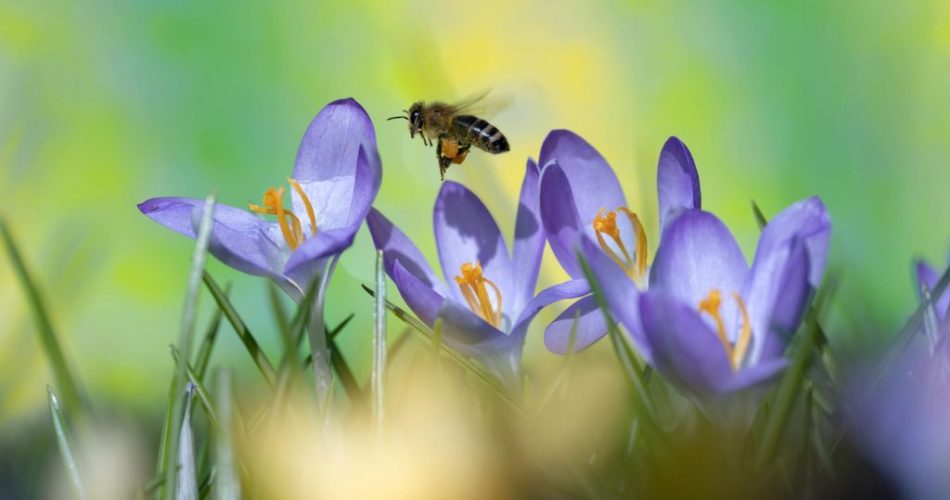
A groundbreaking study in the American Journal of Botany has revealed that soil bacteria can enhance the attractiveness of flowers to pollinators, especially in nutrient-poor soils. This discovery sheds light on the powerful mutualistic relationships between plants, bacteria, and pollinators.
🔬 The Key Players in This Study

🌿 Plant Studied: Chamaecrista latistipula (a legume native to Brazil, Bolivia, and Argentina)
🦠 Bacteria Studied: Nitrogen-fixing rhizobia, which live in root nodules and convert atmospheric nitrogen into a form plants can use
🐝 Pollinators Studied: Bumblebees (genus Bombus), which extract pollen by vibrating flowers (buzz pollination)
🏗 How Does This Work?
1️⃣ Soil bacteria (rhizobia) supply nitrogen to plants in exchange for sugars from the plant’s roots.
2️⃣ This leads to better plant growth and higher-quality pollen, making the plant healthier overall.
3️⃣ Flowers from bacteria-supported plants develop unique color contrasts in their anthers that are particularly attractive to bumblebees.
4️⃣ Bumblebees, which have a different perception of the color spectrum than humans, are more likely to visit and pollinate these flowers.
🧪 The Experiment & Surprising Findings
✅ Researchers grew 60 plants in two types of soil:
- Sandy, nutrient-poor soil (half with rhizobia, half without)
- Nutrient-rich soil (without rhizobia)
✅ Results:
- Plants with rhizobia in poor soil were twice as tall and three times larger than those in nutrient-rich soil!
- Their flowers had a more attractive color contrast to bumblebees.
- Pollen quality improved, making it more appealing to pollinators.
- Plants in nutrient-rich soil without bacteria were smaller and less healthy, despite having access to direct nitrogen sources.
🌍 Why Does This Matter?
🌱 Reveals a hidden role of soil bacteria in shaping pollination success.
🐝 Helps explain why some plants attract more pollinators than others.
🌾 Could be applied in agriculture to enhance crop pollination naturally.
🌎 Supports biodiversity and ecosystem stability by strengthening plant-pollinator interactions.
This study highlights how mutualistic relationships between plants and bacteria not only boost plant health but also enhance pollination, ultimately benefiting entire ecosystems. 🌿💛🐝


