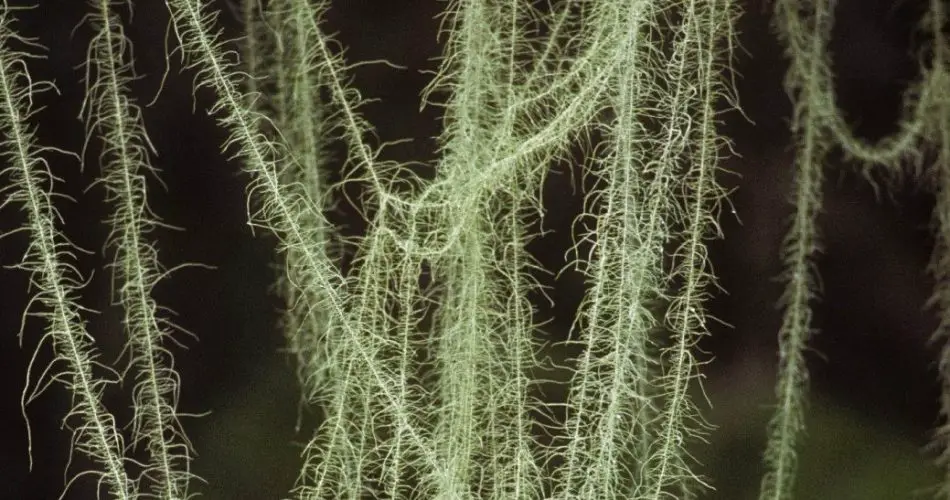
Usnea longissima is a fascinating lichen that has a unique appearance—its long, filamentous branches resemble lianas (tropical vines) at first glance. But unlike real plants, this remarkable organism is a lichen, formed by the symbiotic relationship between a fungus and an alga. Let’s dive into the characteristics, habitat, uses, and ecological impact of this extraordinary lichen.
1. What is Usnea Longissima?

Usnea longissima is a type of pendulous lichen with a distinct greenish or silvery yellowish-green color. It grows in humid environments and often creates a mystical landscape, draping from the canopy of trees. This lichen thrives in clean, unpolluted air, making it an excellent bioindicator of environmental health.
2. Characteristics of Usnea Longissima
Usnea longissima is known for its long, cylindrical branches that can grow up to 3 meters long, often hanging down from tree branches until they almost touch the ground. These branches rarely divide but have dense, short lateral branches with fine fibers ranging from 3 to 40 mm in length. The lichen’s pendulous nature and delicate appearance make it look like a forest vine, but it is, in fact, a non-vascular organism.

3. Habitat and Distribution
In Italy, Usnea longissima is quite rare, mainly found in the mountainous regions of Calabria. The lichen thrives on the trunks and branches of trees, particularly conifers, in areas far from human settlements where the air is clean. Its sensitivity to pollution makes it a valuable indicator of air quality. Globally, it can be found across various continents, including parts of Europe and North America, where it grows in similar unpolluted environments.
4. Uses in Medicine
Historically, Usnea was used in folk medicine for its anti-inflammatory, antimicrobial, and antiseptic properties. It was traditionally used to treat conditions like colds, coughs, wounds, and infections. Today, scientific research is exploring its potential medicinal benefits, including its antitumor, antiviral, and antimicrobial effects. Some studies have focused on Usnea extracts, examining their ability to fight cancer, reduce oxidative stress, and aid in wound healing.
In addition to its medicinal uses, Usnea is also popular in the following industries:
- Cosmetics: For its antimicrobial properties.
- Food Supplements: Due to its antioxidant effects.
- Gardening: As a natural addition to some eco-friendly products.
- Ornaments: Used for its unique and attractive appearance.
5. The Ecological Impact of Usnea Longissima
Usnea longissima plays a significant role in maintaining healthy ecosystems:
- Air Purification: As an excellent air purifier, it absorbs pollutants and dust from the atmosphere, helping to improve air quality.
- Nutrient Release: By breaking down rocks, Usnea aids in releasing essential nutrients into the soil, benefiting plant life.
- Soil Protection: Lichens like Usnea help increase water retention in the soil and prevent erosion, contributing to the overall well-being of the soil and the surrounding environment.
Usnea longissima is not just a fascinating organism with remarkable ecological benefits, but it also serves as a powerful indicator of environmental health. Whether in medicine, ecology, or nature’s aesthetic beauty, this unique lichen proves that small organisms can have a big impact. 🌱


