Turmeric is a staple in Asian cuisine, known for its vibrant yellow color and earthy flavor. While it may seem like an exotic plant, it is actually easy to grow at home, whether in a garden or on a balcony. With the right conditions, you can cultivate your own fresh turmeric and enjoy its numerous health benefits. Here’s how!
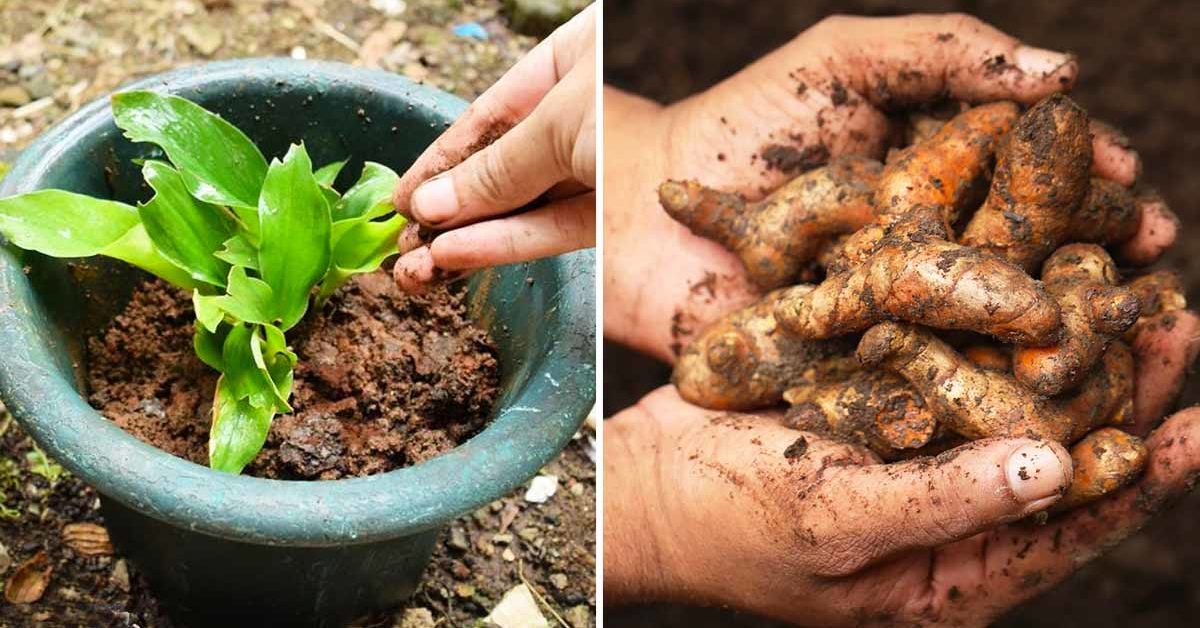
✨ What is Turmeric?
Turmeric is derived from the Curcuma longa plant, which belongs to the Zingiberaceae family—the same family as ginger. Native to Southeast Asia and India, turmeric is often called “Indian saffron” due to its deep golden hue.
Apart from its culinary uses, turmeric is prized for its anti-inflammatory and antioxidant properties, making it a powerful natural remedy.
☀ Best Conditions for Growing Turmeric
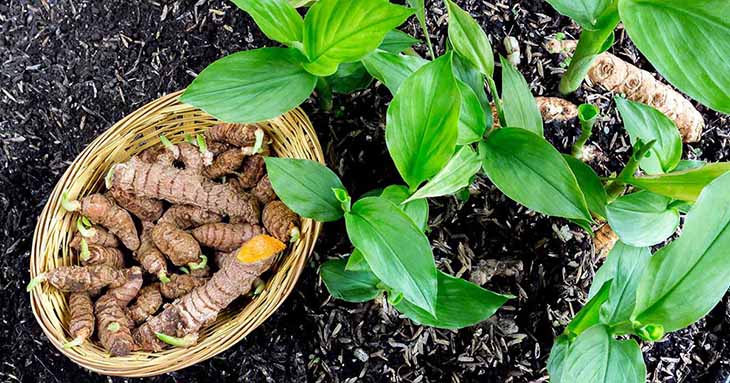
To grow turmeric successfully, you’ll need to mimic its natural tropical environment:
✔ Soil – Use rich, well-draining, and moist soil.
✔ Light – Place in a semi-shaded area; avoid direct sunlight.
✔ Temperature – Turmeric thrives in warm conditions; avoid exposure to cold winds.
✔ Planting Season – Best time to plant: February to May.
✔ Flowering Period – Begins in June and lasts until September.
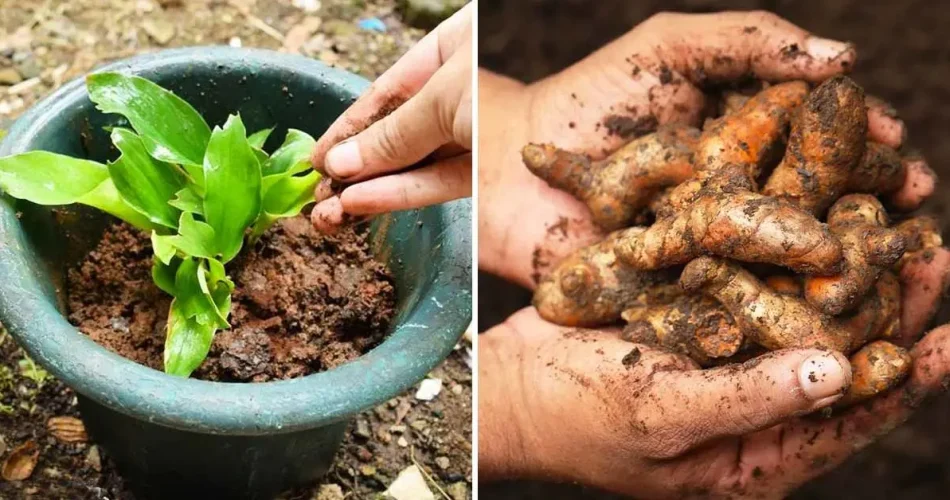
Turmeric can be grown in pots with sandy soil or directly in the ground. However, it takes about three years for the plant to start flowering.
🌱 How to Grow and Maintain Turmeric
Once planted, turmeric requires consistent care to thrive:
🔹 Keep the soil moist – When the plant appears dry, spray the leaves with rainwater.
🔹 Replace potting soil in spring – If growing in a container, refresh the soil at the start of spring.
🔹 Fertilization – During flowering, apply a phosphorus-rich liquid fertilizer once a month.
🔹 Pruning – Remove dry stems and dead leaves to encourage healthy growth.
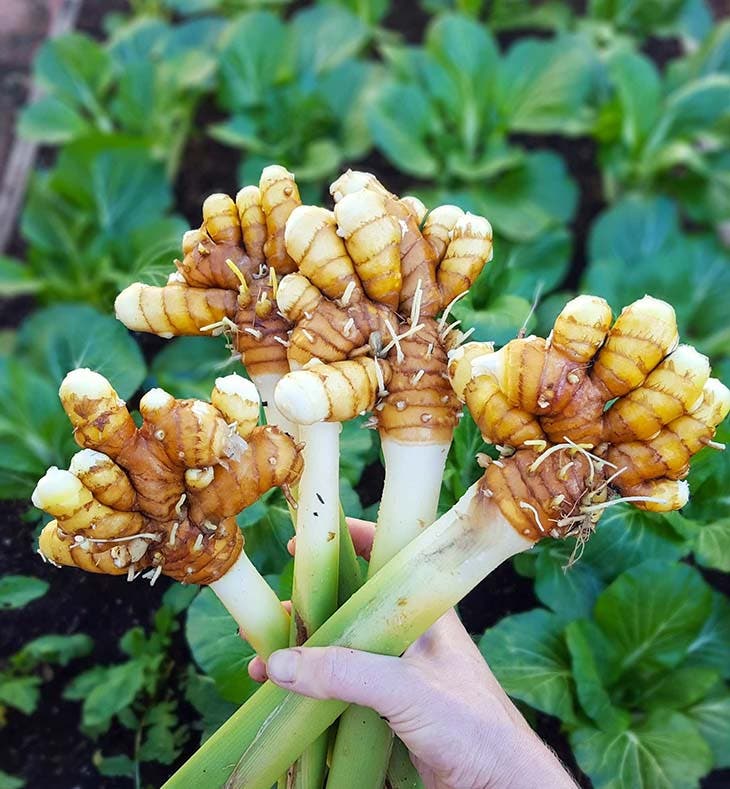
🔹 Propagation – Turmeric is propagated by dividing the rhizome in spring, ensuring each section has at least one bud.
🏡 Harvesting Homegrown Turmeric
Turmeric is ready for harvest once the leaves dry out. Follow these steps:
1️⃣ Boil the rhizomes to soften the skin.
2️⃣ Peel the skin off gently.
3️⃣ Sun-dry the rhizomes for easier grinding.
4️⃣ Once completely dry, grind into powder for use in cooking, teas, and remedies.
💡 Beyond Cooking: Other Uses for Turmeric
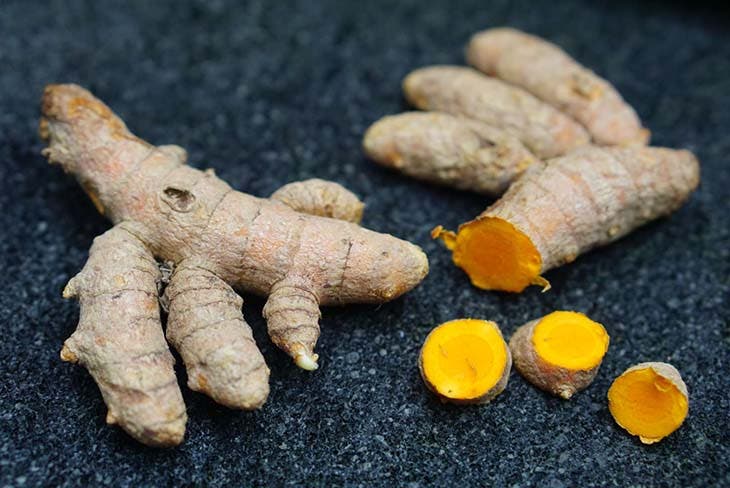
Aside from being a flavorful spice, turmeric has several other uses:
🌸 Ornamental plant – Its lush green leaves and beautiful flowers make it a stunning decorative plant.
💊 Medicinal benefits – Used as a natural anti-inflammatory, digestive aid, and antioxidant.
🍃 Aromatic properties – Adds a pleasant earthy fragrance to gardens.
🛑 Common Pests & Problems
🚨 Spider Mites – The foliage may attract spider mites. To prevent this, spray fermented nettle manure on the leaves.
🚨 Overwatering – Excess moisture can cause rhizomes to rot. To avoid this, use well-draining soil and don’t let water accumulate.
With the right care, you can enjoy fresh, homegrown turmeric year-round! 🌱✨ Would you try growing it at home? Let us know!