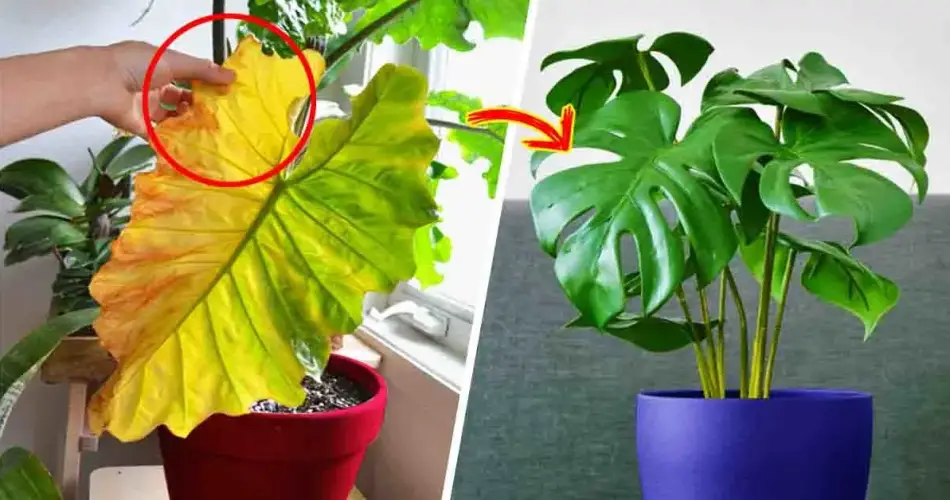
Having small plants at home is a wonderful way to decorate your living space. They not only enhance the atmosphere but also help purify the air you breathe. However, sometimes you may notice that the leaves of your plants are turning yellow, which can be a cause for concern. But why does this happen, and how can you fix it? Here are three common reasons for yellowing leaves and their solutions.

Why Do Plant Leaves Turn Yellow? 🧐
When you water your plants, you might notice that some of their leaves begin to yellow and fall off. According to a study published by the University of Illinois, this condition is often due to chlorosis—a phenomenon where plants fail to produce enough chlorophyll, which is responsible for the green color in leaves.
There are several reasons for chlorosis, and it’s important to identify the cause before your plants become seriously affected. Below, we’ll explore three common reasons why your plant leaves might turn yellow and provide solutions for each.
3 Reasons Why Your Plant Leaves Are Turning Yellow 🌿

1. Lack of Light ☀️
Plants need sunlight to perform photosynthesis, the process that keeps them healthy and green. If they don’t get enough light, their leaves can start to turn yellow or even whitish.
Solution:
To fix this issue, simply move your plants closer to a window with good natural light. With more sunlight, your plants should regain their vibrant color in no time.

2. Overwatering 💧
If you notice that the leaves are turning a dark yellow color, it’s often a sign that your plant is overwatered. This could be due to watering the plant too much, or the soil not draining properly.
Solution:
Check the soil with your fingers. If it feels moist and firm, your plant may not be draining properly. To resolve this, add a thick layer of gravel under the soil to improve drainage. This will prevent water from accumulating around the roots and help your plant thrive.

3. Nutrient Deficiency 🌱
If your plant’s soil is not properly fertilized, it might lack essential nutrients, leading to yellowing leaves. Plants require minerals like nitrogen, potassium, and magnesium to stay healthy.
Solution:
To fix a nutrient deficiency, try soaking a few cloves of garlic in water. Once the water becomes cloudy, use it to water your plant. Garlic acts as a natural fertilizer, providing nutrients to the soil and helping the plant regain its color.
Conclusion 🌼
If your plant leaves have started to turn yellow, don’t panic. By addressing these three common causes—lack of light, overwatering, and nutrient deficiency—you can help your plants return to health. With a little care and attention, your plants will be flourishing again in no time!


