Anyone who owns a home with a beautiful garden often faces the challenge of dealing with weeds. These spontaneous plants, while sometimes charming, symbolize disorder and neglect, making even the most well-kept gardens appear messy. No matter how hard you try to eradicate them—by hand or with various chemical products—they always seem to return. So, how can you eliminate them quickly and delay their reappearance?

Weeds: Every Gardener’s Nightmare
Despite our best efforts to keep them away, weeds are relentless in their return. While they have a natural right to grow, we also have the right to maintain a clean and tidy space. Individually, they may be beautiful, but in a well-maintained lawn or pathway, they can be an eyesore.

We often find ourselves uprooting these little plants, which grow with astonishing speed, seemingly sprouting overnight. Although commercial weed killers promise miraculous results, they can sometimes be only temporary fixes. Let’s explore some natural remedies to achieve similar results without chemicals.
How to Eliminate Weeds Naturally
To remove weeds from walls, gardens, or outdoor paving, gardeners use a technique called mulching. This simple, natural process often occurs spontaneously in nature.

To replicate it, mix compost, grass clippings, leaves, or bark, and spread it over the ground. This acts as a protective shield, blocking sunlight and keeping the soil moist, thereby preventing weeds from growing in the treated areas.
How to Get Rid of Weeds in Your Driveway

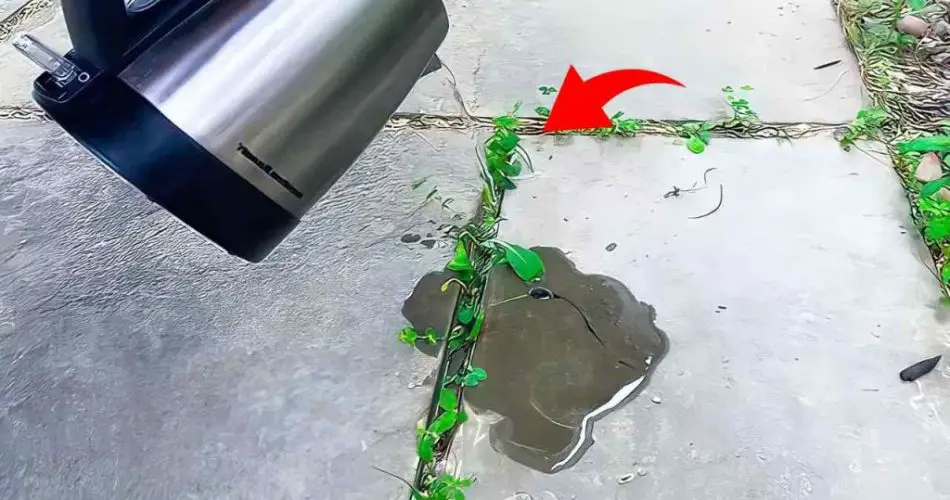
For patios and between tiles, a specific method involves using boiling water. Simply boil water in a pot or kettle and pour it directly onto the weeds.
Be cautious! Boiling water can burn you and will also damage any grass it touches. Avoid using it near other plants or their roots to prevent harm.
One essential lawn tip is to tend to your garden frequently. Mowing your lawn regularly helps prevent weeds from multiplying by stopping them from reproducing. And don’t forget to save some of your grass clippings! Instead of throwing them away, use them to create a compost mix that acts as a shield against weed regrowth.