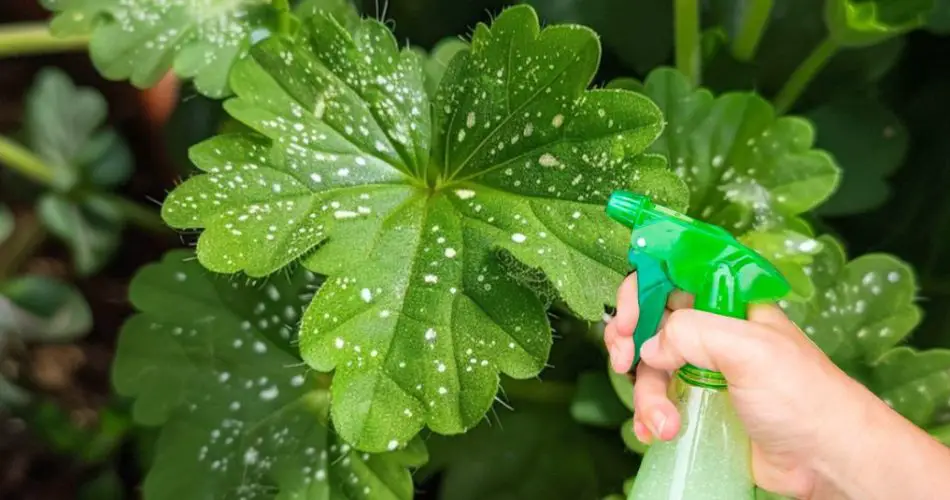
Powdery mildew, also known as “white mold”, is a common fungal disease that affects a wide variety of ornamental and edible plants. It appears as white powdery spots on leaves, stems, and even fruits, spreading rapidly and causing serious damage if left untreated.
But don’t worry—there are natural remedies that can help prevent and control powdery mildew, keeping your plants healthy and thriving.

🌱 What is Powdery Mildew?
Powdery mildew is caused by fungi of the Erysiphaceae family, particularly from the Oidium genus. It thrives in humid, warm environments and can affect plants such as:
✔ Vegetables – Tomatoes, zucchini, cucumbers, and peppers.
✔ Ornamental plants – Roses, begonias, and petunias.
✔ Fruit trees – Apples, grapes, and citrus trees.
🛑 Symptoms of Powdery Mildew:
- White powdery spots on leaves, stems, and fruits.
- Deformation and yellowing of leaves.
- Wilting of affected plant parts.
- Severe infections can lead to defoliation and plant death.
🌿 6 Natural Remedies to Treat Powdery Mildew
Instead of using chemical fungicides, try these natural and eco-friendly solutions to protect your plants!
1️⃣ Baking Soda 🥄💧
Why it works: Baking soda is a natural fungicide that neutralizes the fungus and stops its spread.
✔ How to use:
- Mix 1 tablespoon of baking soda with 1 liter of water.
- Spray on affected leaves and stems every 7–10 days.
2️⃣ Apple Cider Vinegar 🍏🍶
Why it works: The antifungal properties of apple cider vinegar inhibit powdery mildew growth.
✔ How to use:
- Dilute 1 tablespoon of apple cider vinegar in 1 liter of water.
- Spray on affected plants, ensuring proper dilution to prevent leaf burn.
3️⃣ Milk Spray 🥛🌱
Why it works: Milk contains natural proteins that help combat fungal infections and boost plant immunity.
✔ How to use:
- Mix equal parts of skim milk and water.
- Spray directly on leaves every few days.
- Bonus tip: Fermented dairy products like yogurt have probiotics that may enhance the effect.
4️⃣ Herbal Infusions 🌿☕
Why it works: Herbs like thyme, rosemary, and sage contain antifungal compounds that help stop powdery mildew.
✔ How to use:
- Steep fresh or dried herbs in hot water for a few hours.
- Strain and spray the infusion on affected plants.
5️⃣ Garlic Spray 🧄🔥
Why it works: Garlic has potent antibacterial and antifungal properties that kill harmful fungi.
✔ How to use:
- Crush a few garlic cloves and soak in water overnight.
- Dilute 1 part garlic water to 10 parts clean water before spraying on plants.
6️⃣ Antagonistic Fungi (Trichoderma harzianum) 🍄🦠
Why it works: The Trichoderma harzianum fungus is a natural competitor that prevents powdery mildew from spreading.
✔ How to use:
- Apply to the soil or spray on leaves to inhibit fungal growth.
🌱 Prevention Tips: Keep Powdery Mildew Away!
🔹 Ensure good air circulation – Avoid overcrowding plants.
🔹 Water at the base – Keep foliage dry to reduce humidity.
🔹 Prune infected leaves – Remove affected parts to prevent spread.
🔹 Use resistant plant varieties – Some species are naturally immune.
🌿 Now you’re ready to fight powdery mildew naturally! Have you tried any of these remedies? Let us know what worked best for you! 🍃💚