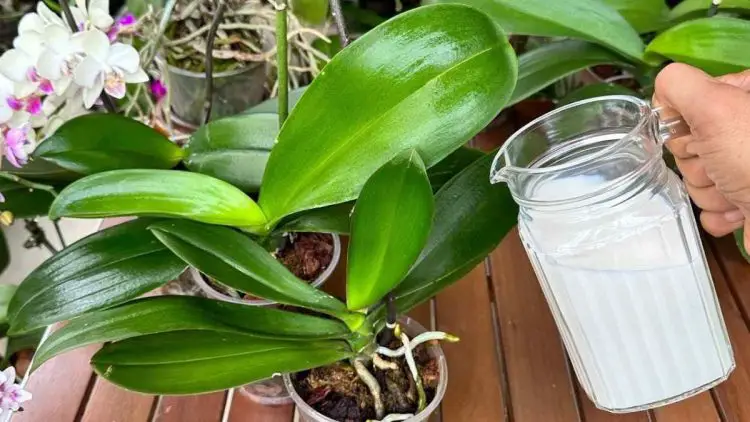
Using milk as a natural fertilizer for orchids is an interesting and cost-effective idea. Milk contains essential nutrients like calcium, potassium, phosphorus, and nitrogen, which can benefit the plants. Here’s a summary of the steps to use milk as a fertilizer for orchids:
Ingredients:
- 1 liter of water
- 50 ml of milk (fresh or expired)
Steps:
- Prepare the Solution:
- In a pitcher, mix 1 liter of water with 50 ml of milk. You can use fresh or expired milk that you would otherwise discard.
- Immerse the Orchid:
- Before applying the fertilizer, immerse the orchid in water for about 30 minutes. This ensures that the soil is moist when you add the milk solution.
- Apply the Fertilizer:
- After the soaking period, pour the milk and water solution onto the orchid’s soil. Allow it to act for approximately 30 minutes.
- Lift and Replace:
- To avoid spills and ensure proper absorption, lift the orchid from its pot and place it in another container during the fertilization process. After 30 minutes, put it back in its original pot.
- Frequency:
- You can repeat this treatment once or twice a month for optimal results.
- Additional Application with Cotton Pad:
- For healthier leaves, you can apply the milk solution directly to the leaves using a cotton pad. This can be done during the same session.
Benefits:
- Nutrient Source: Milk provides essential nutrients that contribute to the overall health of orchids.
- Dust Removal and Leaf Polishing: Milk acts as a natural cleanser, helping to remove dust and polish the leaves of the plant.
Tips:
- Use Expired Milk: Expired milk that is no longer suitable for consumption can be utilized for this purpose, reducing waste.
- Observe Immediate Results: The plant may show immediate improvement, with previously wrinkled leaves becoming smoother and vibrant.
Using natural ingredients like milk as a fertilizer aligns with eco-friendly practices and can be a convenient option for home gardeners. It’s essential to monitor the plant’s response and adjust the frequency of fertilization based on its needs.
Show Comments


