Potatoes at Your Fingertips: Growing Potatoes in Bags for a Supermarket-Free Harvest
Introduction:
Imagine having a steady supply of fresh, homegrown potatoes without ever needing to visit the supermarket. The solution lies in a simple and space-efficient gardening method – growing potatoes in bags. In this article, we’ll explore how cultivating potatoes in bags offers a convenient and cost-effective way to enjoy your own harvest, ensuring a steady supply of this versatile tuber without a trip to the grocery store.
The Potato Growing Advantage:
- Versatile Culinary Staple: Potatoes are a versatile and nutritious staple in many diets worldwide. With the ability to be prepared in numerous ways – from mashed to roasted to fried – having a fresh supply at home ensures endless culinary possibilities.
- Space-Efficient Gardening: Growing potatoes in bags is a space-saving technique, making it ideal for those with limited garden space or even apartment dwellers without access to traditional garden beds.
- Cost-Effective Harvest: Cultivating potatoes in bags is a cost-effective way to produce your own supply. It minimizes the need for store-bought potatoes and provides a continuous harvest with minimal investment.
Growing Potatoes in Bags: A Step-by-Step Guide
- Selecting Potato Varieties: Choose potato varieties suitable for container gardening. Compact or early-harvest varieties such as Yukon Gold or Red Norland work well in bags.
- Choosing the Right Bags: Opt for breathable and durable bags specifically designed for growing potatoes or use large, sturdy containers with drainage holes. This ensures proper aeration and drainage for the growing tubers.
- Preparing Seed Potatoes: Prior to planting, cut seed potatoes into sections with at least one or two eyes per piece. Allow the cut pieces to air dry for a day to reduce the risk of rot.
- Filling the Bags: Fill the bags with a quality, well-draining potting mix or a mix of soil and compost. Place a few inches of the mix at the bottom of the bag, and then add the seed potatoes, spacing them evenly.
- Layering and Watering: Add another layer of soil over the seed potatoes, leaving a few inches from the top. Water thoroughly to ensure the soil is evenly moist.
- Positioning the Bags: Place the bags in a location that receives at least 6-8 hours of sunlight per day. If you’re short on space, consider using a sunny balcony or patio.
- Hilling and Additional Layers: As the potato plants grow, continue adding soil to the bags, covering the stems. This process, known as hilling, encourages additional tuber development along the buried stems.
- Watering and Maintenance: Keep the soil consistently moist, and monitor for pests or diseases. Container gardening may require more frequent watering, so check the moisture level regularly.
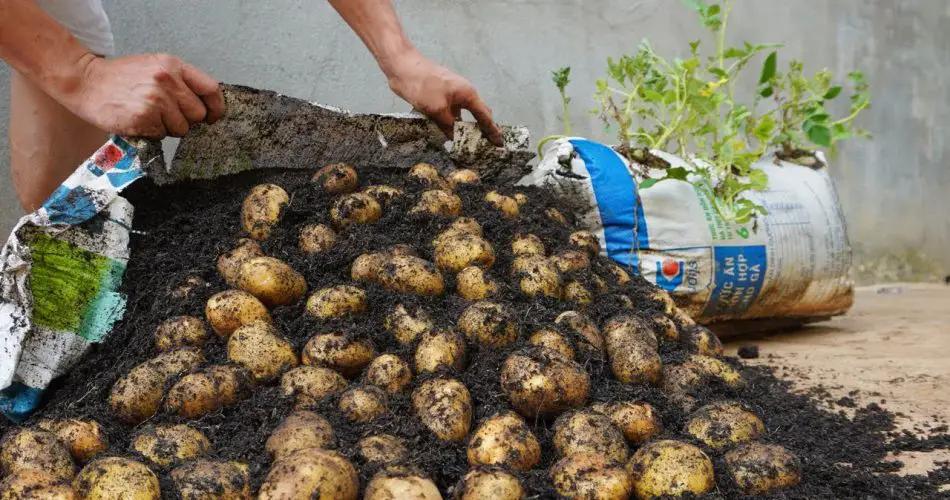
- Harvesting: Harvest potatoes when the plants flower and the foliage begins to yellow and die back. Simply tip the bags and retrieve your fresh, homegrown potatoes.
Benefits of Growing Potatoes in Bags:
- Year-Round Harvest: Growing potatoes in bags allows for staggered planting, providing a year-round harvest of fresh potatoes.
- Space Optimization: Container gardening makes it possible to cultivate potatoes in various locations, optimizing space and making it accessible to those with limited outdoor areas.
- Cost-Efficient Gardening: With minimal investment in bags, soil, and seed potatoes, you can enjoy a cost-effective and continuous supply of homegrown potatoes, reducing the need for store-bought ones.
Conclusion:
Bid farewell to store-bought potatoes and embrace the satisfaction of growing your own by cultivating potatoes in bags. This space-efficient and cost-effective gardening method ensures a year-round harvest of fresh, homegrown potatoes, right at your fingertips. With a little care and attention, you’ll soon be enjoying the versatility and flavor of your own homegrown tubers without the need to visit the supermarket.