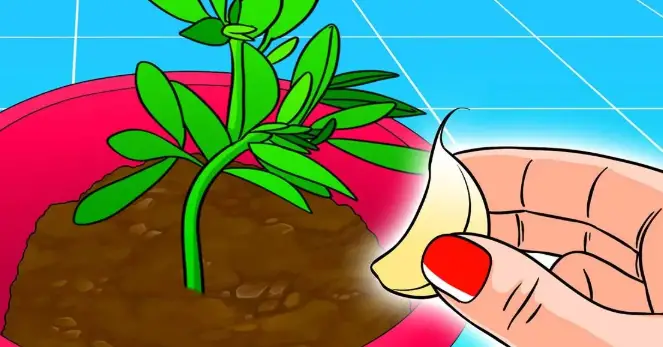
Garlic is more than just a flavorful addition to your kitchen; it’s also a powerful natural repellent for your plants. Known for its medicinal properties and antiseptic qualities, garlic can be a helpful ally in keeping your plants healthy and free from pests. Whether you’re growing plants indoors or in your garden, garlic’s antibacterial and pungent odor make it an effective and environmentally friendly solution to protect your green spaces from harmful insects.

Garlic: A Natural Repellent for Your Plants
Garlic cloves are not only used in cooking but are also highly effective in keeping plant pests at bay. The strong scent of garlic is a natural deterrent to various insects that can damage your plants. By integrating garlic into your plant care routine, you can reduce the need for chemical pesticides, which can harm both your health and the environment.
How to Use Garlic in Indoor Plants
For your indoor plants, one simple method is to plant a garlic clove directly in the pot. The garlic will naturally ward off pests that typically target plant foliage. However, the garlic clove shouldn’t remain in the soil for too long. Once it starts to germinate, remove it and replace it with a fresh one. This method can be repeated 2 to 3 times per month to maintain a pest-free environment.
Garlic Insecticide for Garden and Indoor Plants

Another way to harness the power of garlic is by making a natural insecticide. This is particularly effective for aphid infestations. Here’s how to make your own:
- Chop 100g of garlic cloves finely.
- Add the chopped garlic to 1 liter of non-calcareous water (such as rainwater or spring water).
- Let the mixture macerate for 24 hours.
- Bring the mixture to a boil in a covered saucepan for 30 minutes.
- Allow it to cool with the lid on, then filter the solution.
- Transfer the filtered solution to a spray bottle.
This insecticide should only be kept for 24 hours and stored in a cool place. It’s best to apply it at sunset to avoid burning your plants’ foliage. Use the solution undiluted for aphids, or dilute it to 20% to treat cryptogamic diseases like mildew and powdery mildew.
Benefits of Garlic in the Vegetable Garden
Garlic isn’t just useful for your indoor plants; it’s also beneficial for your vegetable garden and orchard plants. Garlic contains sulfur, an active compound that helps fight fungal diseases such as mildew, powdery mildew, and leaf curl on fruit trees. Additionally, garlic can help treat plants infested with aphids, caterpillars, and mites, making it a versatile tool in pest control.
Other Natural Insecticides for Your Plants

In addition to garlic, there are several other natural insecticides that can help protect your plants from pests. Some options include:
- Ash: Effective against slugs and snails.
- Nettle manure: A natural insecticide that also doubles as a fertilizer.
- Black soap: Known for its ability to combat various pests.
- Coffee grounds: Helps deter ants and snails.
By incorporating these natural ingredients into your plant care routine, you can protect your plants from pests while promoting healthy growth.
Conclusion
Garlic is a powerful and natural way to protect your plants from pests and diseases. Whether planted in the soil or used to make a homemade insecticide, it’s an easy, eco-friendly solution for gardeners looking to avoid chemicals. Incorporating garlic and other natural remedies into your gardening practices ensures your plants stay safe and healthy without harming the environment.


