To get rid of mold on potting soil and protect your houseplants, follow these tips:
- Recognize Mold:
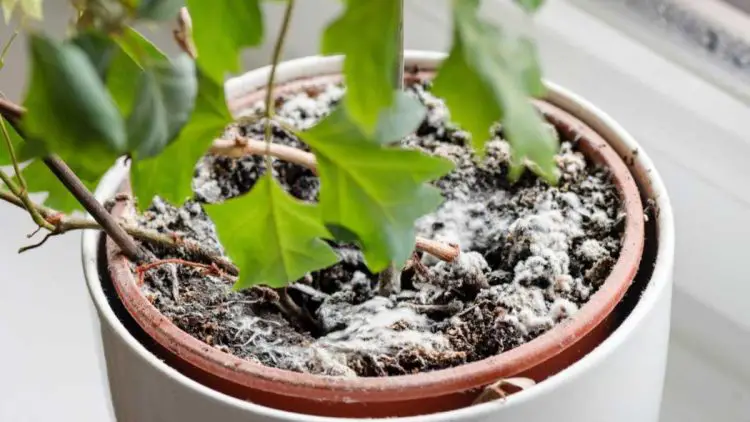
- Mold appears as a soft and hairy layer on the surface of the soil.
- If you’re unsure whether it’s mold or limescale deposits, note that limescale is hard and can be removed with a spoon.
- Mold requires urgent action as it can spread to the plant and may pose health risks.
- Fight Mold with Household Remedies:
- If the soil is heavily infested with mold, repot the plant immediately.
- Take the plant outside to prevent mold spores from spreading indoors.
- Remove most of the soil from the roots and discard it in compost or household trash.
- Clean the flowerpot thoroughly with rubbing alcohol, vinegar, or heat treatment.
- Plant the repotted plant in fresh soil, trimming the roots if necessary.
- Precautions Against Mold:
- Avoid overwatering, as mold thrives in waterlogged or consistently moist conditions.
- Check if the top layer of soil is dry before watering the plant, especially in winter when water requirements decrease.
- Use pots with drainage holes and saucers to allow excess water to drain properly.
- Consider adding a draining layer of expanded clay at the bottom of the pot for improved drainage.
- Regularly repot plants to prevent soil compaction and poor drainage.
- Sprinkle bird sand over the potting soil to encourage surface water evaporation and reduce the risk of mold growth.
- Steps to Avoid:
- Avoid simply sprinkling bird sand on mold, as it does not address the underlying issue.
- Be cautious when removing old soil to avoid damaging the roots, and do not completely remove all soil.
- Refrain from adding fungicides or household mold remedies to irrigation water, as they may harm the plant.
- Do not rub the roots with rubbing alcohol or vinegar, as these products can be harmful to plants.
By following these tips and precautions, you can effectively combat mold on potting soil and keep your houseplants healthy and thriving.
Show Comments