Rosemary is a medicinal plant with numerous health benefits, known for its ability to prevent various diseases. Native to the Mediterranean, it is widely used in the world of hygiene and beauty. Aside from its health benefits, rosemary is also an attractive shrub that can enhance the aesthetic appeal of your home. With a little care and attention, you can easily grow rosemary at home and enjoy fresh sprigs year-round.
How to Reproduce Rosemary at Home

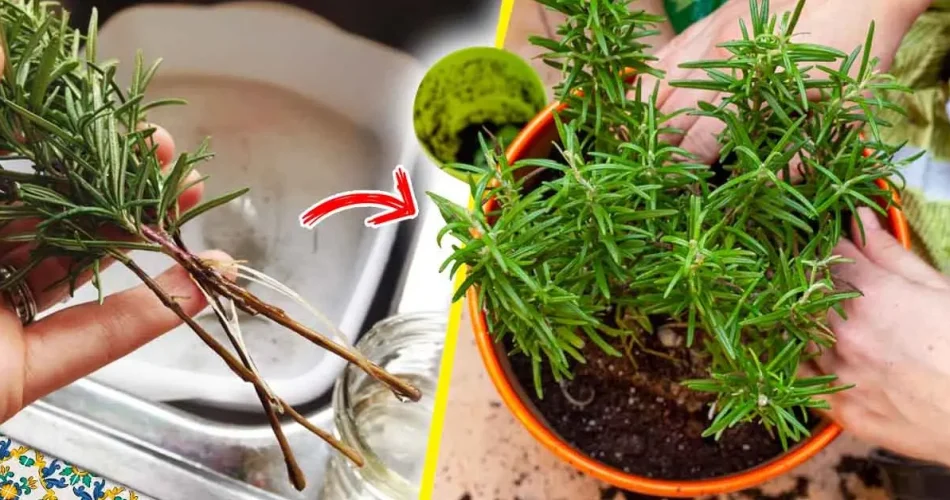
Growing rosemary from a cutting is simple and cost-effective. Here’s a step-by-step guide to help you grow your own rosemary plant from scratch.
You will need:
- A glass jar
- Water
- A sprig of rosemary
- Scissors or a knife
Step 1:

Cut a 15 cm long sprig of rosemary from an existing plant. Make sure to cut it diagonally to encourage better rooting.
Step 2:
Place the sprig into a glass jar filled with water.
Step 3:
Remove the lower leaves from the sprig, leaving only the top leaves intact. Allow the sprig to sit in the jar of water overnight.
Step 4:
Place the jar near a window where it will receive some natural light. Make sure to fill the jar with fresh water every day.
Step 5:
After a week, you will start seeing growth, but the optimal results will take longer to show.
Step 6:
After about 3 weeks, the sprig should begin to form roots and may even start to sprout new growth.
Step 7:
Once the roots reach about 15 cm, it’s time to transplant your rosemary into a pot of soil.
Step 8:
Dig a hole in the soil and carefully place the rooted sprig. If the soil covers any of the leaves, remove them so the plant can grow more efficiently.
How to Care for Rosemary
Rosemary is a hardy plant that requires little maintenance. By following these care tips, you can ensure your plant thrives and becomes a valuable addition to your home.
Light
Rosemary needs direct sunlight for a few hours each day. After exposure to the sun, place the plant in shade to avoid the risk of sunburn on its leaves.
Watering

Rosemary does not require a lot of water. However, ensure the soil does not dry out completely. Keep it moderately moist for best results.
Temperature
Rosemary thrives in moderate temperatures, so it’s essential to protect it during winter, especially if grown indoors.
Pruning
Pruning is important to maintain the plant’s health, as rosemary leaves can sometimes dry out. Regular pruning will encourage new growth.
Substrate
Rosemary only requires organic fertilizer once a year, ideally during the spring or fall. Use earthworm castings or other natural fertilizers to nourish the plant.
Space
If planting rosemary in the ground, it will grow easily. In a pot, provide at least 40 cm of depth, as rosemary’s roots are typically quite long and need ample space to grow.
Harvest
To harvest rosemary, cut small branches from the plant. Even sprigs that are beginning to dry out can be useful. Dry them in the sun and use them in cooking or as a spice. You can also use rosemary for making hair or face masks.
Conclusion
Growing rosemary at home is a simple process that yields long-term benefits. Not only does it purify your environment, but it also provides a constant supply of fresh herbs for cooking and wellness. By following the above steps and care tips, you can ensure your rosemary plant flourishes, saving you the cost of buying fresh sprigs from the store. Enjoy your homegrown rosemary for both its beauty and usefulness!