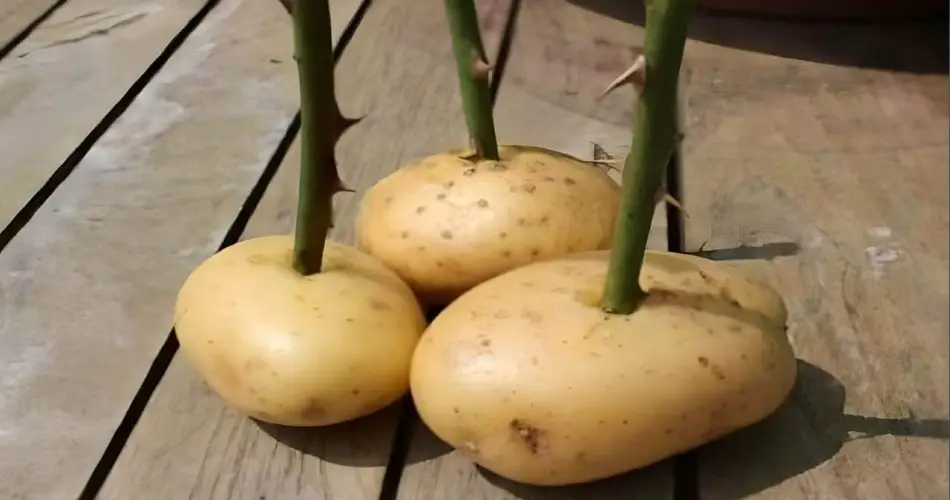
You can create an entire rose garden using nothing more than a rose stem and a potato. Here’s how to do it and what you can expect in just one week.
Why Use a Potato for Rose Cuttings?
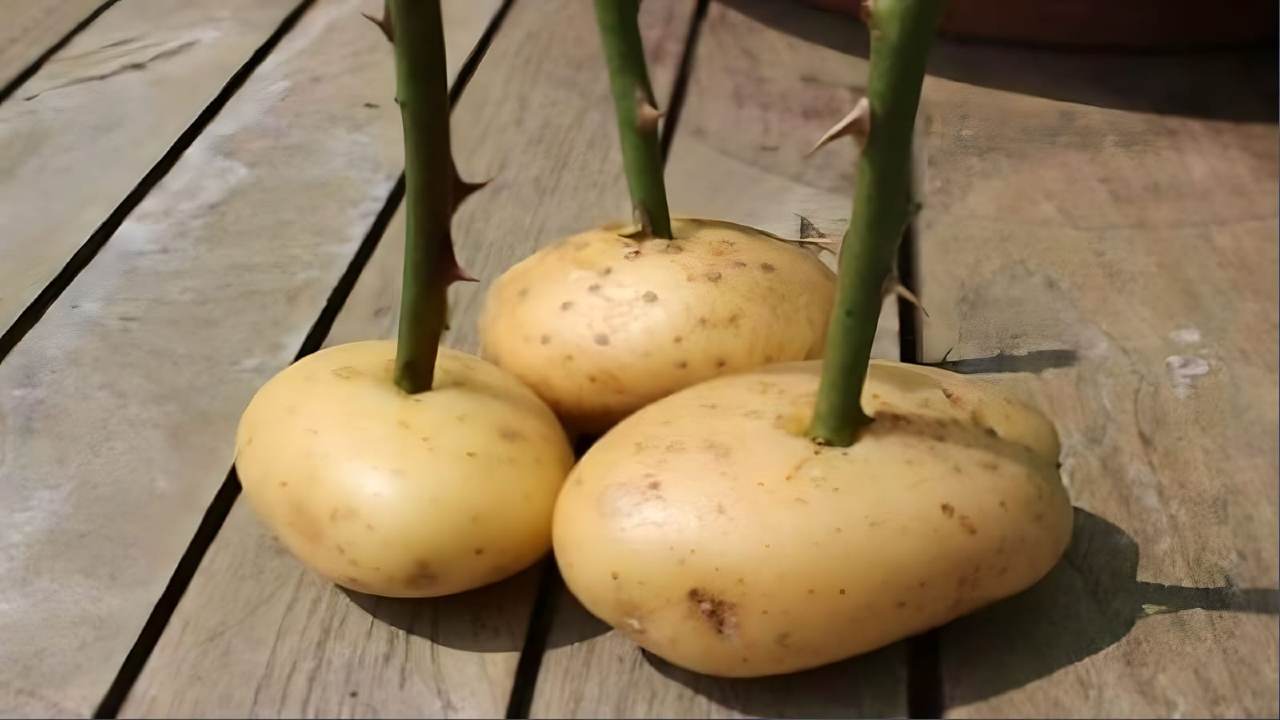
Inserting a rose stem into a potato might sound unusual, but it’s an effective method for propagating roses. This technique utilizes the potato’s natural properties to aid in rooting. Potatoes are rich in dry substances such as vegetable proteins, vitamins, minerals, starch, and phytohormones, which support plant growth. Additionally, the potato helps protect the cutting from hypothermia and soil-borne pathogens, and its inherent moisture provides a constant supply of hydration.
Preparing the Rose Cuttings
The key to growing roses from cuttings is to use a method of asexual reproduction. This involves cutting parts of the plant, such as stems or twigs, and cultivating them to produce a new plant.
- Select Your Stem: Choose 15-20 cm long stems from an older rose plant that has already flowered. The cut should be clean and oblique.
- Initial Preparation: Place the cut stem in a vase with a few centimeters of water to keep it hydrated.
Using the Potato Method

- Choose Fresh Potatoes: Select fresh, mold-free potatoes without dark spots. Make a small hole about 2 cm deep using a pencil or similar tool.
- Prepare the Cutting: Dip the rose cutting in a rooting compound (available at nurseries) or cinnamon, which stimulates root formation. Insert the cutting into the hole in the potato, positioning it so the cut end is inside.
- Potting: Place the potato in a pot with universal soil, ensuring the top of the potato remains visible and the cutting is upright.
- Create a Humid Environment: For faster growth, cover the pot with a plastic bag to retain moisture and heat. However, remove the bag at least once a day to allow the plant to breathe.
Caring for Your Rose Cutting

- Warmth: Keep the pot in a warm area with a temperature above 20°C.
- Light: Avoid direct sunlight but ensure the cutting receives bright, indirect light.
- Watering: Keep the soil moist, but avoid waterlogging.
After a few weeks, the roots will have developed, and the potato will provide nourishment to help the new plant grow strong. Once fully rooted, you can either transplant the rose or continue to grow it in the pot. This simple method allows you to cultivate roses with minimal cost and effort, potentially leading to a flourishing rose garden.