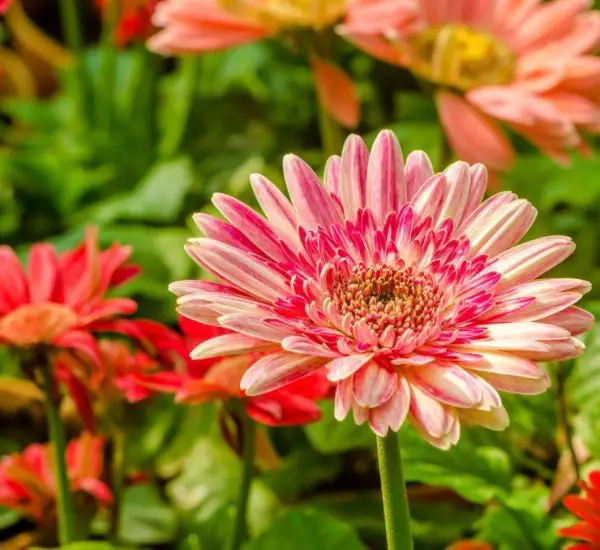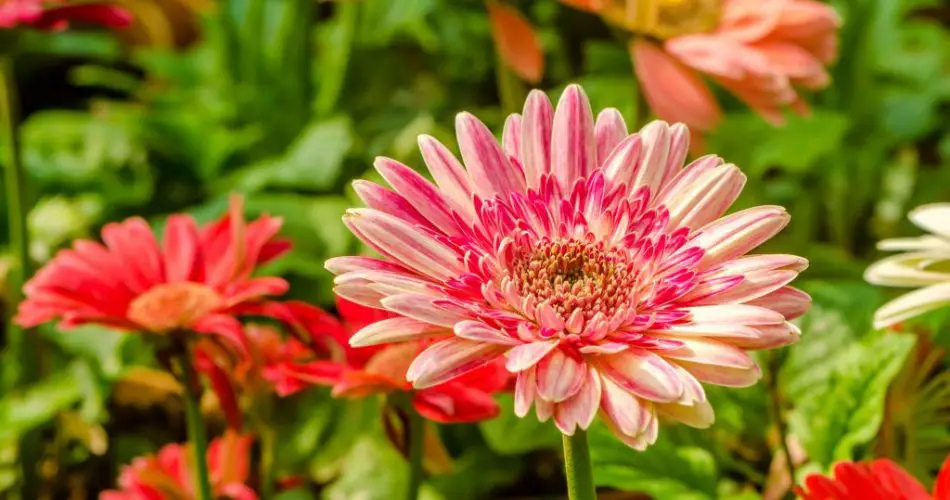
Gerberas may resemble daisies at first glance, but their larger size, longer stem, and vibrant colors set them apart. Available in white, yellow, pink, lilac, purple, red, and orange, these flowers add a cheerful touch to any balcony or garden. Originating from warm climates, gerberas can thrive in pots or gardens with proper care.
What Makes Gerberas Unique?

Gerberas belong to the Asteraceae family and are native to Asia, Africa, and South America. Though widely cultivated in Europe since the 19th century, the most common variety found in Italy is Gerbera jamesonii, also called the Transvaal daisy.
These flowers have a fascinating characteristic: they open at dawn and close after sunset, making them a beautiful addition to outdoor spaces. With the right conditions, their blooming season lasts from spring to autumn.
How to Grow Gerberas

Growing Gerberas in Soil
If planting gerberas in your garden, choose a sunny location where they receive 6-8 hours of sunlight daily. The soil should be well-drained and slightly acidic (pH 5.5 – 6.5) to prevent water stagnation, which can damage the roots.
💡 Pro Tip: Avoid planting gerberas in areas where water collects after rain, and protect them from strong winds.
Growing Gerberas in Pots
For indoor or balcony gardening, place potted gerberas near a large window where they get at least six hours of sunlight. Use well-drained soil with a layer of expanded clay at the bottom to improve drainage.
🔸 Watering Tip: Only water when the top 5 cm of soil is dry, and avoid wetting the leaves or plant base. Overwatering can cause root rot.
🌱 Fertilizer: Use a liquid fertilizer rich in potassium, applied every two weeks to encourage healthy blooms.
Winter Care
Gerberas are not frost-resistant. In cold climates, move them indoors or place them in a heated greenhouse to protect them during winter.
Gerbera vs. Daisy: What’s the Difference?
Although they share similarities, gerberas and daisies have distinct characteristics:
🌸 Size & Color: Gerberas are larger and more colorful, while daisies are simpler with their signature white and yellow look.
🌿 Stem: Gerberas have longer, sturdier stems, whereas daisy stems are thinner and shorter.
🌍 Origin: Gerberas come from South Africa, America, and Asia, while daisies originate from Europe and Western Asia.
💬 Symbolism: Daisies represent innocence and faithful love, while gerberas symbolize beauty, purity, and joy.
Common Gerbera Pests & Solutions

🐜 Aphids: Use insecticide tablets for potted plants or pyrethrin-based sprays for garden-grown gerberas.
🕷️ Red Spider Mites: Caused by heat and low humidity. Move the plant to a shadier spot and increase humidity by misting the surrounding area.
With their stunning colors and long-lasting blooms, gerberas are a fantastic addition to any home or garden. By following these simple care tips, you can enjoy these cheerful flowers throughout the warmer months! 🌺✨