Have you ever noticed tiny droplets of water forming on a plant’s leaves early in the morning or late at night? Some believe this is a sign that plants can “cry”, expressing emotions like sadness or stress. But is that really the case?

In reality, this phenomenon is called guttation, a natural process through which plants release excess water and nutrients. Let’s dive into what guttation is and why plants “weep” from their leaves.
🌿 What Is Guttation?

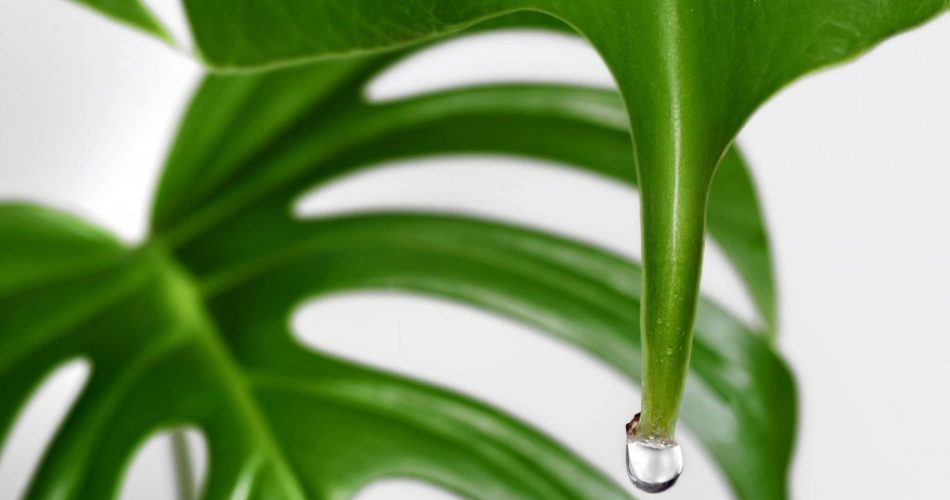
Guttation is a biological process that occurs when a plant absorbs more water than it needs, and excess moisture is released through tiny pores called hydathodes, located at the edges of the leaves.
The droplets that form are not just water, but a mix of organic and inorganic compounds like sugars, mineral salts, and nutrients.
This process typically happens:
✔ At night or early morning, when humidity is high and temperatures are low
✔ When transpiration slows down, due to the closing of stomata (the small openings on leaves that regulate water loss)
✔ In plants growing in very moist soil, as their roots absorb more water than needed
🌱 Why Do Plants “Cry” From Their Leaves?

Plants do not “cry” in the emotional sense, but guttation occurs for several biological reasons:
💧 1. Root Pressure & Excess Water
When soil moisture is high, the roots continuously absorb water. Since the plant doesn’t need all of it, the internal root pressure pushes the extra water out through the leaves.
🌡️ 2. Environmental Conditions
High humidity and low temperatures slow down transpiration, meaning the plant cannot get rid of excess water through evaporation. Instead, it uses guttation as an alternative method to release moisture.
🌿 3. A Sign of a Healthy Plant?
In many cases, guttation is completely normal and indicates that a plant is well-hydrated and actively growing. However, it can also signal that the plant is absorbing too many nutrients from the soil, which could lead to stress over time.
🚨 Should You Be Concerned About Guttation?
In general, guttation is harmless, but excessive guttation might indicate:
⚠ Overwatering – If a plant consistently “weeps,” it may need less water.
⚠ Too many nutrients – Excess fertilizers can increase guttation and may lead to salt buildup in the soil.
⚠ Poor air circulation – High humidity traps moisture, making it harder for plants to release water through normal transpiration.
🌎 Final Thoughts: Plants Don’t Cry, They Adapt!
While the idea of plants shedding tears is poetic, guttation is simply a natural adaptation that helps them regulate water levels and maintain healthy growth. Next time you see droplets on your plant’s leaves, you’ll know it’s not sadness—it’s science! 🌱💦