After harvesting the last of your strawberries, the work in the bed isn’t over yet. Proper care post-fruiting is essential to ensure a rich harvest next year. Here’s how you can help your strawberry bushes recover and prepare them for abundant fruiting in the future.
Removal of Old Leaves and Whiskers:
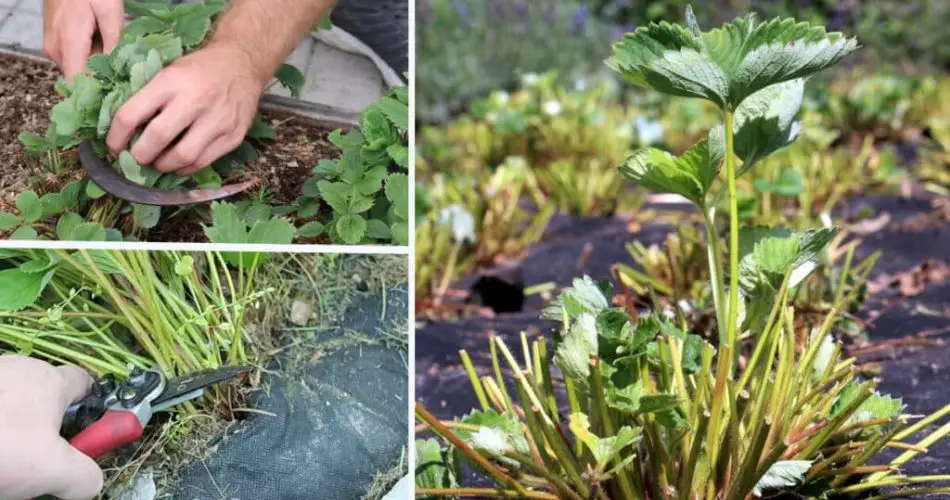
Begin by carefully cutting off reddened and withered leaves, as well as excess whiskers from the strawberry plants. Avoid pulling them by hand to prevent damaging the bushes. Burn the old leaves and whiskers to prevent diseases and pests from spreading.
Pest and Disease Control:
Inspect the young leaves of the strawberry plants closely. Twisting or corrugated leaves may indicate a strawberry mite infestation. Treat affected bushes with acaricidal preparations promptly.
Yellowing central leaves and short, thickened legs are signs of nematode infection. Remove infected plants, treat the soil with boiling water, and discard the affected plants properly.
Weeding and Loosening:
Keep the strawberry beds weed-free to prevent competition for nutrients. Loosen the soil around the bushes to a depth of 5 cm and maintain a spacing of 10 cm between rows. Ensure the root system is covered with soil while leaving the upper part of the bush above ground level, especially for first-year plants whose roots may protrude over time.
Feeding:
Feed strawberries with mineral fertilizers containing trace elements (30 g per 1 m²). Avoid fertilizers with potassium chloride, as it can hinder berry growth and fruiting. Apply fertilizers to a depth of approximately 6 cm.
Alternatively, use last year’s compost or diluted chicken manure (15 parts manure to 1 part water). When applying these, ensure the solution does not contact the leaves to prevent burns and diseases.
Watering:
Even after fruiting, maintain regular watering of strawberries. Water the soil once a week with 1 bucket of water per 1 m². Drip irrigation is ideal as it moistens the soil without waterlogging it. After watering, loosen the soil and mulch the beds with chopped grass, straw, or peat.
Mustache Removal:
Regularly remove strawberry runners (whiskers) to redirect the plant’s energy towards forming flower buds for next year’s harvest. This practice encourages robust fruiting.
By following these straightforward guidelines for caring for strawberries after harvesting, you’ll ensure your plants produce an abundant and high-quality harvest of sweet berries next season.