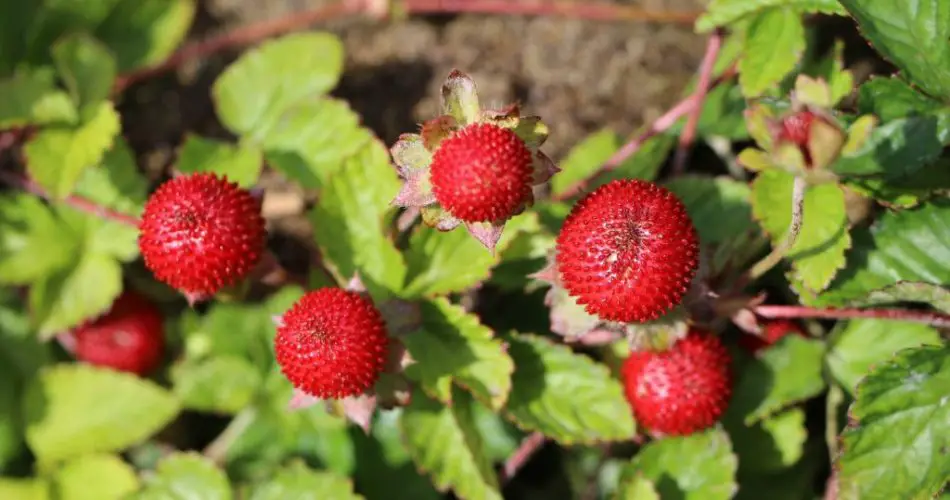
If you’ve ever wandered through the woods or a meadow, you may have come across tiny red strawberries growing naturally. But are they wild strawberries, or have you stumbled upon a “crazy strawberry” (false strawberry)—a lookalike that has no flavor at all?
It’s easy to mix them up, but knowing the difference can save you from disappointment! Here’s how to identify and distinguish these two plants.
🍓 What Is a False Strawberry (Potentilla indica)?
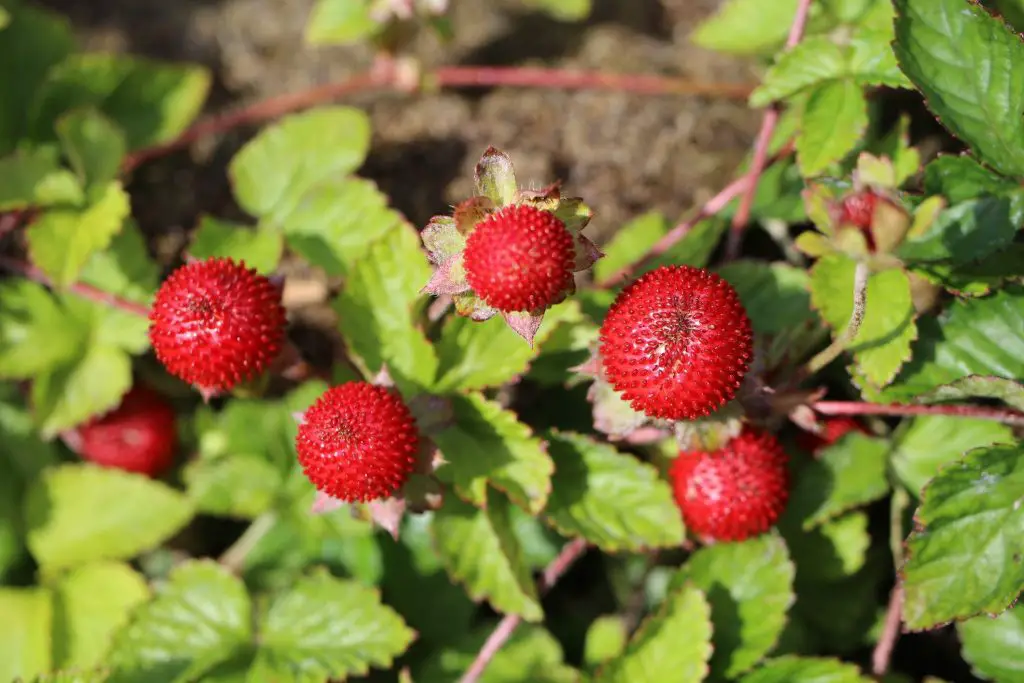
Also known as “crazy strawberry” or “false strawberry”, Potentilla indica is a perennial herbaceous plant from the Rosaceae family. Originally from East Asia, it has spread to Europe, North America, and other regions, often being considered a weed because of its fast growth.
🔍 Key Features of Potentilla indica:
✅ Bright yellow flowers that bloom in spring and summer.
✅ Shiny, three-part leaves that are usually less hairy than wild strawberry leaves.
✅ Small red fruits that look like strawberries but are flavorless.
✅ Erect, non-hairy stems (unlike wild strawberries, which have hairy and climbing stems).
While it may look delicious, the false strawberry has no taste—so don’t expect the sweet, juicy flavor of a real strawberry!
🍓 What Is a Wild Strawberry (Fragaria vesca)?

The wild strawberry, also known as woodland strawberry, is a small, red fruit with an intense aroma and sweet taste. Scientifically called Fragaria vesca, it is closely related to the cultivated strawberry (Fragaria × ananassa) that we enjoy at home.
🔍 Key Features of Wild Strawberries:
✅ Small, sweet, and fragrant red berries that are highly flavorful.
✅ White (or slightly pink) flowers with five petals.
✅ Three-part leaves that are toothed and hairy on the underside.
✅ Climbing, hairy stems and rhizomatous roots.
Wild strawberries grow in forests, humid meadows, and woodland areas. If you spot them, they’re safe to pick and eat fresh, just like blackberries!
🔎 How to Tell the Difference?

Since false strawberries and wild strawberries look so similar, here are three main ways to tell them apart:
1️⃣ Look at the Flowers
- Wild strawberries have small, white flowers (sometimes with a pinkish hue).
- False strawberries have yellow flowers.
2️⃣ Examine the Leaves
- Wild strawberry leaves are toothed, hairy on the lower surface, and more textured.
- False strawberry leaves are shinier, smoother, and less hairy.
3️⃣ Check the Stems and Growth Pattern
- Wild strawberries have hairy, climbing stems and rhizomatous roots.
- False strawberries have erect, non-hairy stems and fibrous roots.
🍓 Final Thoughts
If you find tiny red berries in the wild, don’t be fooled! Check the flowers, leaves, and stems before tasting them. If they’re fragrant, sweet, and growing from a climbing plant with white flowers, congratulations—you’ve found real wild strawberries!
Would you try picking and eating wild strawberries on a hike? Let me know in the comments! 🍃🍓