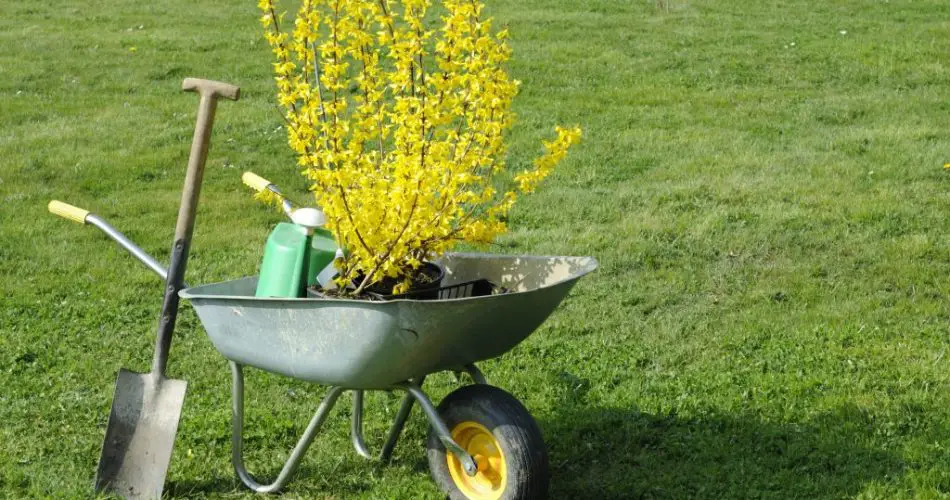
If you’re looking to revive your beautiful Forsythia plant and propagate it in your garden, multiplying it through cutting is a simple and effective method. Forsythia, with its bright yellow flowers, is a heat-resistant plant that thrives even in drought-prone areas. In this article, we’ll guide you through the process of propagating Forsythia by cutting and provide useful tips to make it last longer.

What is Forsythia?
Forsythia is a deciduous shrub that belongs to the Oleaceae family. With about 11 species, Forsythia is native to eastern Asia and even the Balkan Peninsula. Known for its yellow bell-shaped flowers, it can grow up to 1-3 meters in height. Forsythia is a hardy plant, well-suited for environments with high drought risk, and its scientific name is Forsythia Vahl. The plant is named after William Forsyth, a Scottish botanist and founder of the Royal Horticultural Society.
How to Multiply Forsythia by Cutting
1. How Does Multiplication by Cutting Occur?
Forsythia can be propagated using two methods: by cutting or by layering. Here, we will focus on propagation by cutting.
- Cuttings: Take 15-20 cm long cuttings from a healthy and vigorous Forsythia plant. Strip the leaves from the lower part of the cutting, leaving a few leaves at the top.
- Rooting Hormone: Dip the base of the cutting in a rooting hormone to encourage root development.
- Planting: Plant the cutting in a pot filled with fertile, well-drained soil.
- Moisture and Light: Keep the soil moist and place the cutting in a warm, bright location. Roots should develop in 4-6 weeks. Once well-established, transplant the cutting to a larger pot or into the ground.
The Botanical Characteristics of Forsythia

Forsythia is a deciduous shrub, which means its foliage falls off in the colder months. It grows between 1 and 3 meters tall and produces small, bell-shaped flowers that are grouped in corymbs (clusters resembling a bunch). These flowers have a delicate, pleasant scent.
Varieties and Species
There are several varieties of Forsythia, each varying in height, flower color, flowering period, and leaf shape. Common varieties include:
- Forsythia x intermedia
- Forsythia suspensa
- Forsythia viridissima
- Forsythia ovata
- Korean Forsythia
The Best Time to Propagate Forsythia by Cutting
The ideal time to propagate Forsythia by cutting is during the plant’s vegetative rest phase, which typically occurs between late November and early March. During this period, Forsythia has absorbed enough nutrients but hasn’t yet begun producing new buds, making it the perfect time for cutting propagation.
How to Make a Forsythia Cutting
For the best results, prepare a container with a mixture of peat and sand in equal parts. This blend provides a well-draining environment for your Forsythia cuttings. Once the cuttings have rooted and grown to a height of 7-10 cm, compact the soil gently around the cutting and water it thoroughly.
How Much and How to Water Forsythia

Forsythia is a drought-resistant plant, adapted to areas where water is scarce. As a result, it doesn’t require frequent watering. Follow these guidelines for optimal watering:
- Water once a week, or less, depending on weather conditions.
- Use a watering can to avoid disturbing the soil.
- Water early in the morning or late in the evening to prevent excess evaporation.
- Always check the soil moisture before watering: water only if the top 5 cm of soil is dry.
Conclusion: Healthy Forsythia, Year After Year
By following these simple steps to propagate Forsythia by cutting, you can enjoy vibrant yellow flowers in your garden for years to come. With its resilience to drought and minimal watering needs, Forsythia is an ideal choice for gardens in need of a low-maintenance, colorful plant. 🌼


