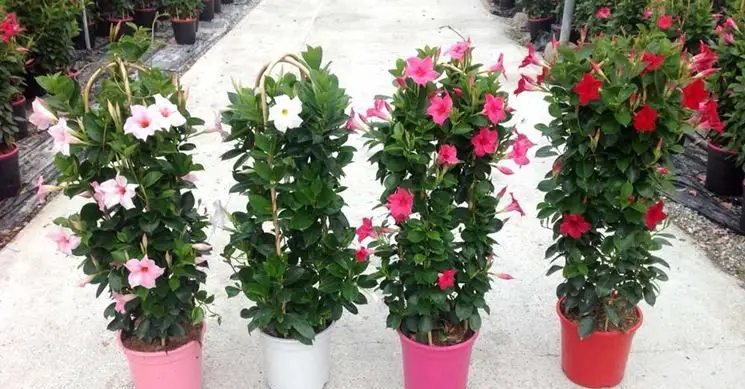
Dipladenia (also known as Mandevilla) is a stunning climbing plant with vibrant bell-shaped flowers in shades of white, pink, and red. Native to Central America, this ornamental plant is perfect for balconies, terraces, and gardens. With the right care, dipladenia can bloom from late spring to autumn, adding a tropical touch to your space.
Follow this easy guide to growing, maintaining, and making your dipladenia flourish!
🌱 How to Grow Dipladenia

Dipladenia thrives in rich, well-drained soil. You can use a mix of garden soil, peat, sand, leaves, and expanded clay. If you don’t have these, a universal potting mix works too.
🏡 Growing Dipladenia Indoors
✔ Use a pot with drainage holes to prevent root rot.
✔ Repot every spring into a slightly larger container.
✔ If the plant grows too tall, support it with a stake or trellis.
✔ ⚠️ Warning: Dipladenia is toxic if ingested, so keep it out of reach of children and pets.
🌳 Growing Dipladenia in the Garden
✔ The best time to plant it outdoors is spring, after the last frost.
✔ Prepare a sturdy support structure for climbing growth.
✔ Dig a hole slightly larger than the root ball and plant it with the roots just below ground level.
🌸 How to Make Dipladenia Bloom

Dipladenia blooms from late spring to autumn. To encourage healthy flowers, place it in a cool, bright spot during winter and ensure proper watering and fertilization.
☀️ Climate & Sunlight Needs
✔ Prefers a mild climate and struggles in extreme heat or cold.
✔ Ideal temperature: Around 21°C (70°F).
✔ In hot summers, protect it from scorching sun by providing partial shade.
✔ In winter, keep it in a cool, bright location (between 10–14°C (50–57°F)), away from frost and strong winds.
🌿 The Best Soil for Dipladenia

✔ Use well-draining soil with a mix of garden soil, peat, sand, and organic matter.
✔ If the soil lacks nutrients, add humus or fertilizer in spring and summer.
💧 Watering Tips
✔ Water frequently in summer, allowing the soil to dry slightly between waterings.
✔ Dipladenia tolerates short droughts, but prefers consistent moisture.
✔ To maintain humidity, place wet gravel in the saucer and mist the leaves in the evening.
✂️ Pruning Dipladenia
✔ Prune in autumn, during the plant’s dormant phase.
✔ Helps shape the plant and encourages healthy branching and flowering.
🌱 How to Propagate Dipladenia

✔ The easiest method is by cuttings.
✔ In spring, take 10 cm (4 in) cuttings from young shoots.
✔ In summer, cuttings from older branches can be used.
✔ Keep the cuttings in moist soil until roots develop.
❄️ Protecting Dipladenia in Winter
✔ If temperatures drop below 10°C (50°F), bring the plant indoors or into a sheltered area.
✔ Maintain a stable temperature between 10–15°C (50–59°F).
🌿 Final Thoughts
Dipladenia is easy to grow and rewards you with beautiful, vibrant flowers all season long. Whether indoors or outdoors, with the right light, water, and care, your climbing beauty will thrive! 🌸💚